
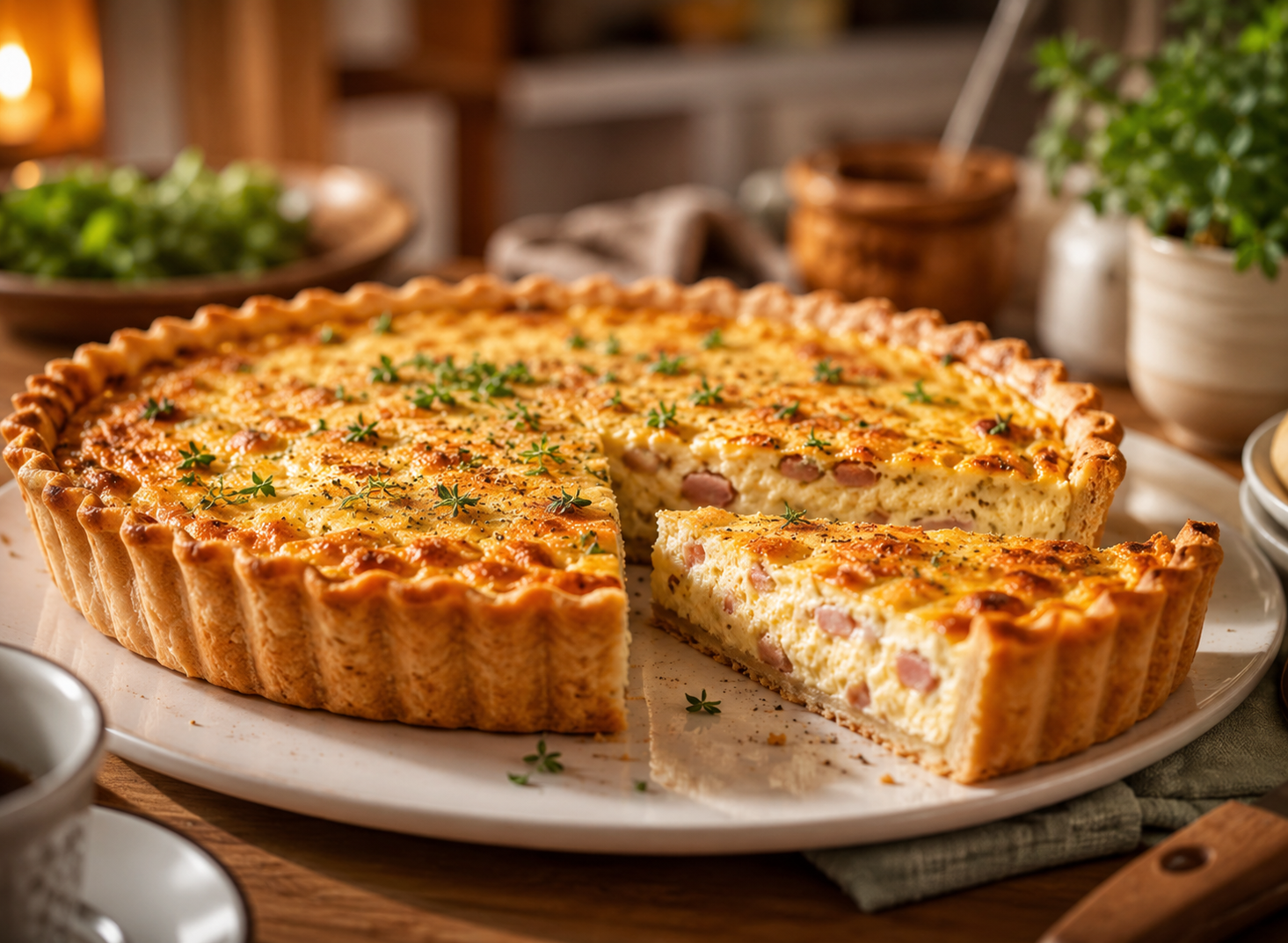
Quiche is a savory, open-faced pastry that originates from France, celebrated for its rich and creamy filling encased in a perfectly flaky crust. While the classic quiche typically features eggs, cream, and cheese as its base, it often incorporates ingredients like vegetables, meats, or seafood to create a variety of flavorful combinations.
Quiche is versatile, making it a popular choice for breakfast, brunch, lunch, or even as a light dinner option. Its roots trace back to the region of Lorraine, giving rise to the iconic “Quiche Lorraine,” which includes bacon or lardons as a key ingredient. Today, quiche has become a beloved dish globally, adored for its simplicity and adaptability.
Quiche Pronunciation: How to Say it Like a French Chef
Before you start baking, it helps to know exactly how to order or talk about this dish with confidence. Many people stumble over the spelling, but the pronunciation is surprisingly simple. You say it as “keesh.”
Interestingly, while the dish is deeply associated with French cuisine, the word itself has Germanic roots. It originates from the German word “Kuchen,” which simply means cake. The French region of Lorraine later adapted the word and the recipe, giving us the culinary term we use today.
The Classic Quiche Lorraine: The Gold Standard of Savory Custards
If you want to experience this dish in its most traditional form, you must start with a Quiche Lorraine. This iconic recipe sets the benchmark for all savory egg tarts. The authentic version relies on a very short list of high-quality ingredients: a buttery pastry shell, a rich egg and heavy cream custard, and savory cubes of lardon or bacon.
While many modern cafes add Swiss or Gruyère cheese to their Lorraine, culinary purists often debate whether cheese belongs in the original recipe at all. Regardless of where you stand on the cheese debate, a well-executed Quiche Lorraine delivers an incredibly rich, smoky flavor profile that melts in your mouth.
Exploring Quiche Recipes: From Traditional Roots to Modern Twists
Creating a quiche allows for endless culinary creativity while staying grounded in its traditional roots. Here’s a step-by-step guide to crafting both a classic Quiche Lorraine and incorporating modern twists:
Traditional Quiche Lorraine Recipe
- Prepare the Pastry Shell: Begin by making a buttery shortcrust pastry from scratch or opt for a high-quality store-bought version. Roll it out, fit it into a tart pan, and blind bake until slightly golden.
- Make the Filling: Whisk together eggs, heavy cream, a dash of salt, pepper, and nutmeg to create the custard base. Add cooked lardons or bacon carefully for smoky depth of flavor.
- Assemble: Pour the egg mixture into the cooled pastry shell, making sure it evenly coats the bacon pieces.
- Bake to Perfection: Bake in a preheated oven at 375°F (190°C) for about 30-40 minutes or until the filling sets and develops a slight golden color on top. Allow it to cool before slicing.
Adding a Modern Twist
- Experiment with Flavors: Swap traditional lardons for spinach and feta, smoked salmon and dill, or roasted vegetables for a vegetarian option.
- Cheese Variations: Introduce Gruyère, cheddar, or even blue cheese to enhance richness, depending on your preferences.
- Alternative Pastries: Use whole-grain, gluten-free, or even a sweet potato crust for a healthier twist.
- Spices and Herbs: Add a creative flair with fresh parsley, chives, paprika, or even a pinch of cayenne for a hint of heat.
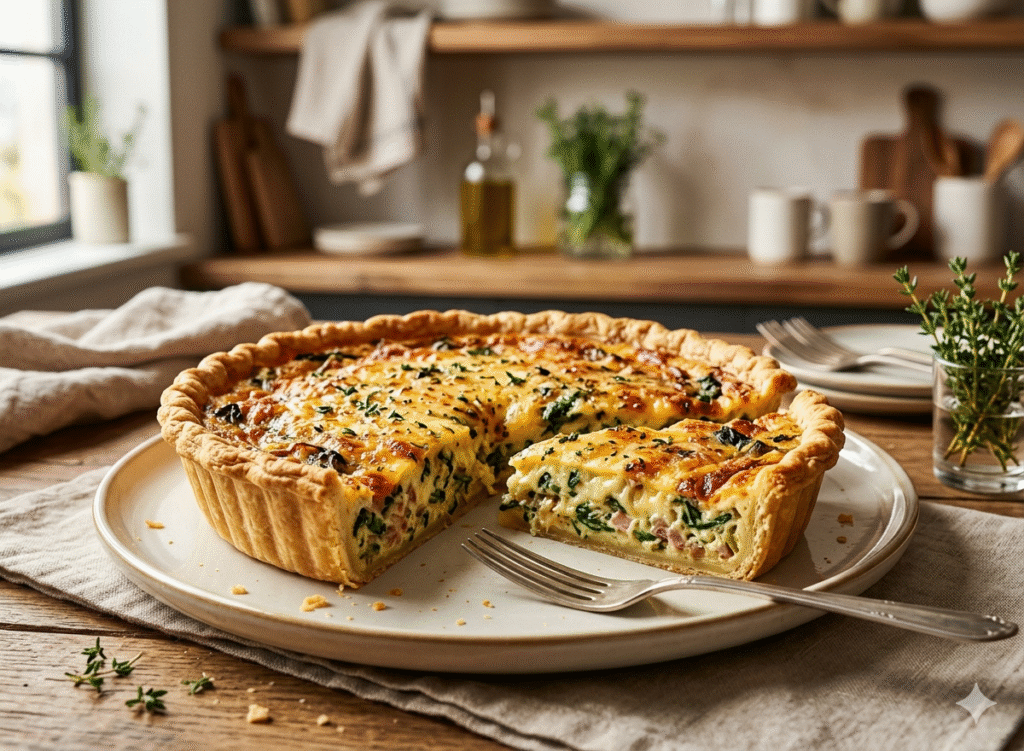
With these steps, you can enjoy both the comforting familiarity of a traditional Quiche Lorraine or venture into new territory by putting your unique spin on this versatile dish.
The Secret to Best Quiche Recipes: Texture, Crust, and Fillings
Achieving the perfect quiche requires attention to three essential elements—texture, crust, and fillings. Follow these steps to master each aspect:
- Focus on the Texture
The ideal quiche should have a creamy, custard-like texture without being too dense or watery. Balance your egg-to-dairy ratio carefully, typically using one part egg to two parts cream or milk. Whisk ingredients thoroughly to ensure a smooth consistency, and avoid overbaking to maintain a tender, luscious filling. - Crafting the Crust
The crust provides the foundation for your quiche, so it needs to be golden, flaky, and buttery. Chill your dough before rolling to prevent shrinking and create those light, flaky layers. For an extra crispy base, blind bake the crust before adding the filling, using pie weights to prevent bubbling. - Selecting Fillings
Choose fresh, high-quality ingredients for the most flavorful quiche. Balance your flavors by combining rich elements like cheese or bacon with lighter options such as spinach or mushrooms. Avoid overloading the filling, as too many ingredients can offset the egg custard’s delicate balance.
By perfecting these three components, you’ll be able to create quiches that are consistently delicious and sure to impress.
Quiche Spinach and Feta: A Vegetarian Delight Full of Nutrients
For those seeking a lighter, vegetable-forward option, combining spinach and feta cheese is a guaranteed crowd-pleaser. This combination offers a vibrant green visual appeal and a wonderful tangy flavor profile.
To make this version successful, you must thoroughly drain your spinach. Frozen spinach works perfectly, provided you squeeze out every drop of excess water using a clean kitchen towel. The salty, crumbly texture of feta cheese cuts through the richness of the egg custard, resulting in a balanced and highly nutritious meal that works just as well for dinner as it does for brunch.
Quiche Mini: Creative Ideas for Party Appetizers and Brunch
When hosting a large gathering, slicing and serving a whole tart can be messy and time-consuming. This is where bite-sized versions come into play. Mini savory tarts are the ultimate party appetizer.
You can make these easily by pressing small circles of pie dough into a standard muffin tin. Because they bake much faster than a full-sized tart, you need to watch them closely in the oven. The best part about making mini versions is that you can create several different flavor profiles in a single batch, ensuring every guest finds a variation they love.
Quiche No Crust: A Low-Carb and Gluten-Free Alternative
Not everyone wants or can eat a heavy pastry crust. If you are watching your carbohydrate intake or managing a gluten intolerance, a crustless version is an excellent alternative.
Often referred to as a frittata’s close cousin, a crustless savory tart is incredibly easy to prepare. You simply grease your pie dish thoroughly, pour in your fillings, top with the egg custard, and bake. The cheese and eggs naturally form their own light edge against the baking dish, giving you all the rich flavors of a traditional tart without the heavy pastry.
Essential Tips for Reheating and Storing Your Quiche
- Allow Quiche to Cool Completely
Before storing your quiche, ensure it has fully cooled to room temperature. This prevents condensation from forming, which can make your quiche soggy. - Store in an Airtight Container
Place leftover quiche slices or the entire quiche in an airtight container. Alternatively, wrap it tightly in plastic wrap or aluminum foil to maintain freshness. - Refrigerate or Freeze
For short-term storage, refrigerate your quiche for up to 3-4 days. If you plan to store it longer, wrap it securely and freeze it, where it can last for up to 2 months. - Reheating Instructions (Oven Method)
Preheat your oven to 350°F (175°C). Place the quiche on a baking sheet and cover it with foil to prevent drying out. Heat for 15-20 minutes, or until warmed through. - Reheating Instructions (Microwave Method)
For a quicker option, place a slice of quiche on a microwave-safe plate and cover it with a damp paper towel. Heat on medium power in 30-second intervals until heated evenly.
By following these steps, you can enjoy your quiche fresh and flavorful anytime!
Frequently Asked Questions About Quiche Preparation
Can I freeze an unbaked savory tart?
It is generally better to freeze a fully baked tart. Freezing the liquid custard in an unbaked crust often leads to a soggy base and a separated filling when you finally try to bake it.
Should I use milk or heavy cream?
While you can use milk, heavy cream or half-and-half produces a much better, creamier mouthfeel. Skim milk often results in a watery, less stable custard.
Why did my custard crack on top?
Cracking usually happens when the dish is overbaked. Remember that the center will continue to cook slightly from residual heat after you pull it out of the oven. Remove it when the edges are set but the center still has a slight jiggle.
Bring the French Bakery to Your Kitchen
Mastering the art of the savory egg tart gives you a reliable, impressive dish for any occasion. By understanding the importance of blind-baking, proper egg-to-dairy ratios, and moisture control, you can confidently experiment with endless flavor combinations. Grab your favorite pie dish, select your freshest ingredients, and start building your own signature recipe today.


