German cuisine often brings to mind massive, savory main courses like crispy pork knuckles and sizzling sausages. Yet, the true magic of a German meal frequently lies right next to the main event. The side dishes are what pull the entire plate together, offering a balance of acidity, richness, and comforting textures.
Learning how to prepare authentic German side dishes can completely transform your home cooking. You gain the ability to turn a simple roasted meat dish into a Bavarian feast. These recipes rely on accessible ingredients, straightforward techniques, and centuries of culinary tradition. Let’s explore the essential sides you need to know, from quick weeknight potato dishes to vibrant summer salads.
The Heart of Deutschland: Traditional German Side Dishes
When you think of classic German comfort food, two heavy hitters immediately come to mind. These foundational sides appear on tables from Munich to Berlin.
Sauerkraut
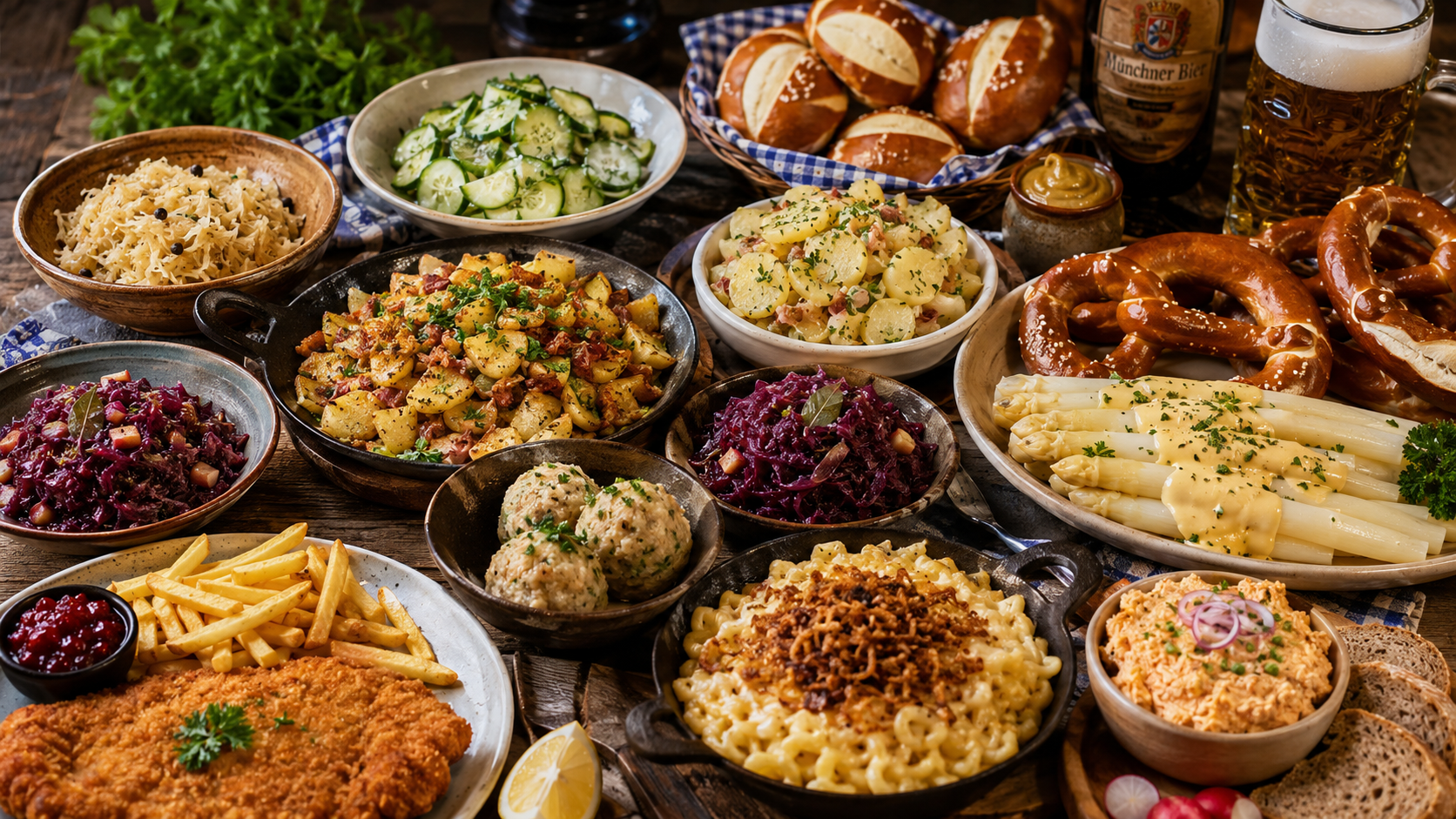
Sauerkraut translates simply to “sour cabbage,” but this humble fermented dish offers a complex, tangy flavor profile that cuts through the richness of heavy meats. Traditional preparation involves slowly braising the fermented cabbage with a touch of apple, onion, and perhaps a splash of white wine. The slow cooking mellows the intense acidity, leaving a deeply savory and slightly sweet side dish that pairs beautifully with pork.
Spätzle
If you have never experienced Spätzle, you are missing out on one of Europe’s greatest comfort foods. These tiny, irregular egg noodles are made by scraping a wet batter directly into boiling water. Once they float to the top, they are drained and quickly pan-fried in generous amounts of butter. The result is a slightly chewy, buttery noodle that perfectly soaks up rich gravies and meat juices.
Quick and Simple: Easy German Side Dishes for Busy Weeknights
You do not need hours to bring a taste of Germany into your kitchen. Some of the most beloved sides come together in minutes.
Bratkartoffeln (Fried Potatoes)
Bratkartoffeln is the German answer to home fries, and it is a masterclass in texture. Parboiled potatoes are sliced thick and fried in a hot skillet with bacon (Speck) and diced onions. The key is to leave the potatoes undisturbed in the pan long enough to develop a deep, golden-brown crust. A sprinkling of fresh parsley finishes the dish, making it a perfect, quick accompaniment to a simple weeknight pork chop or fried egg.
Refreshing Cold German Side Dishes for Summer Picnics
German food is not just for cold winter nights. The cuisine features brilliant, refreshing cold dishes that are ideal for outdoor dining.
Traditional German Potato Salad
Unlike the heavy, mayonnaise-laden potato salads found at many American barbecues, traditional southern German potato salad uses an oil and vinegar base. Sliced, warm potatoes are tossed with a warm broth, sharp mustard, oil, vinegar, and a scatter of fresh chives. The potatoes absorb the tangy liquid as they cool, resulting in a vibrant, light, and flavor-packed dish.
Gurkensalat (Cucumber Salad)
Gurkensalat is incredibly crisp and refreshing. Thinly sliced cucumbers are salted to draw out excess moisture, then tossed in a light dressing made from sour cream (or a simple vinegar and oil mix) and plenty of fresh dill. It offers a cooling crunch that acts as a brilliant palate cleanser during a heavy meal.
Best German Side Dishes for Bratwurst: The Perfect Pairings
A great Bratwurst demands the right supporting cast to highlight its savory, spiced flavor profile.
Mustard-Based Salads
Sausages and mustard are a legendary pairing. Serving your Bratwurst alongside a sharp, mustard-heavy potato or cabbage salad enhances the savory notes of the meat. The bite of the mustard beautifully cuts through the high fat content of the sausage.
Pretzel Rolls
Instead of a standard hot dog bun, serve your Bratwurst tucked inside a freshly baked pretzel roll (Laugenbrötchen). The chewy exterior and soft, dense crumb of the pretzel bread hold up perfectly to the juices of the sausage and heavy dollops of spicy mustard.
Healthy and Flavorful: Traditional German Vegetable Side Dishes
Vegetables play a massive role in the German diet, often prepared in ways that maximize their natural sweetness and earthy flavors.
Rotkohl (Braised Red Cabbage)
Rotkohl is a stunningly vibrant side dish. Red cabbage is slowly braised with tart apples, onions, vinegar, and warm spices like cloves and juniper berries. The slow cooking breaks down the tough cabbage leaves into a tender, sweet, and sour delicacy that brings an incredible pop of color to any plate.
Spargel (White Asparagus)
In the spring, Germany goes completely wild for Spargel. White asparagus is grown entirely underground to prevent it from turning green, resulting in a milder, more delicate flavor. It is traditionally boiled until tender and served simply with melted butter or a rich Hollandaise sauce.
Crispy and Savory German Side Dishes for Schnitzel
Schnitzel—meat pounded thin, breaded, and fried to golden perfection—requires sides that complement its crispy texture without overpowering it.
Classic Fries and Potatoes
You cannot go wrong with Pommes Frites (french fries) alongside a crispy Schnitzel. The double crunch of the fried potatoes and the breaded meat is deeply satisfying. Alternatively, a serving of simple parsley potatoes (Petersilienkartoffeln) provides a buttery, soft contrast to the crunchy main course.
Lingonberry Jam
While technically a condiment, a dollop of Lingonberry jam is essential. The tart, slightly sweet berry preserve offers a fruity contrast that brightens up the heavy, fried flavors of the Schnitzel.
Meat-Free Delights: German Side Dishes Vegetarian Style
Modern German cuisine features plenty of options for those skipping meat, heavily leaning on dairy and bread-based comfort foods.
Semmelknödel (Bread Dumplings)
Semmelknödel is the ultimate way to use up stale bread. Dried bread cubes are soaked in warm milk, mixed with eggs, parsley, and onions, formed into balls, and boiled. These hearty dumplings act like sponges, ready to soak up rich mushroom gravies or creamy vegetable sauces.
Käsespätzle (Cheese Spätzle)
Think of Käsespätzle as the elevated German cousin of macaroni and cheese. Freshly made Spätzle is layered with pungent mountain cheeses (like Emmental or Gruyère) and baked until bubbly. It is then topped with a generous pile of crispy, caramelized onions. It is rich, heavy, and incredibly satisfying.
Must-Have German Side Dishes for Oktoberfest Celebrations
If you are hosting an Oktoberfest party, the side dishes are crucial for keeping your guests happy while the beer flows.
Beer Cheese Dip (Obatzda)
Obatzda is a Bavarian beer garden classic. It is a creamy, heavily spiced spread made by blending aged Camembert cheese with butter, a splash of wheat beer, paprika, and onions. It is intensely flavorful and meant to be scooped up with fresh bread.
Large Pretzels (Brezeln)
No Oktoberfest is complete without massive, soft baked pretzels. With their deep brown, shiny crusts and dusting of coarse sea salt, they are the perfect vehicle for scooping up Obatzda or spicy mustard.
Common Ingredients Used in Authentic German Cooking
German cuisine is renowned for its hearty flavors and use of simple yet distinctive ingredients. Below is a step-by-step explanation of some of the most common ingredients that form the foundation of authentic German cooking:
- Potatoes
Potatoes are a staple in German cuisine, used in numerous forms such as mashed (Kartoffelpüree), fried (Bratkartoffeln), and dumplings (Knödel). They are a versatile base for many dishes and side dishes. - Cabbage
Cabbage plays a significant role in German cooking, particularly in the preparation of dishes like sauerkraut and red cabbage (Rotkohl). These tangy and slightly sweet accompaniments complement meats perfectly. - Pork
Pork is a dominant protein in German cuisine, featuring in classics such as bratwurst, schnitzels, and Schweinshaxe (roasted pork knuckle). The rich flavors of pork are often enhanced with sauces or mustard. - Bread (Brot)
Germany is famous for its wide variety of bread, ranging from rye bread (Roggenbrot) to dark sourdough loaves. Bread is a daily staple and is often served with cheese, meats, or spreads. - Mustard (Senf)
German mustard, especially the mildly spiced Bavarian style, is a key condiment served with sausages, pretzels, and roasted meats. - Beer
Beer is not only a beloved beverage in Germany but is also occasionally used as an ingredient, particularly in stews and marinades, adding a distinct depth of flavor. - Spices and Herbs
Spices like caraway seeds, paprika, nutmeg, and bay leaves are common, along with herbs such as dill and parsley. These ingredients help to build the robust flavors typical of German dishes. - Pickled Items
Pickled cucumbers (Gurken) and other vegetables are often used as side dishes or toppings, adding a sharp tang and a refreshing balance to richer foods. - Cheese
German cheeses such as Camembert, Limburger, and Quark provide creamy textures and balance, particularly in snacks and spreads like Obatzda.
Each ingredient contributes to the rich tapestry of German culinary traditions, providing variations in texture, flavor, and aroma that make the cuisine comforting and distinctive.
Pro Tips: How to Make Your German Side Dishes Taste More Authentic
Nailing the authentic flavor of German sides comes down to a few very specific culinary techniques and flavor balancers.
First, master the balance of sweet and sour. Many dishes, particularly those involving cabbage or potato salads, rely on a delicate tension between sharp vinegar and a touch of sugar or fruit. Taste your dishes frequently and adjust the acidity as you cook.
Second, embrace caraway seeds. This distinctive spice is heavily used in German cooking, particularly with cabbage dishes and potatoes. It adds a warm, earthy, slightly anise-like flavor that instantly makes a dish taste authentically European. Toasting the seeds slightly before adding them to your recipe will amplify their flavor.
FAQs
1. What are some essential ingredients in German side dishes?
Common ingredients include potatoes, cabbage, vinegar, mustard, caraway seeds, and fresh herbs such as dill or parsley. These staples form the foundation of many traditional recipes.
2. Are German side dishes difficult to prepare?
Not at all! Most German side dishes are simple to make and rely on basic techniques like boiling, roasting, or mixing fresh ingredients. With a bit of practice, you can master them in no time.
3. Can I customize traditional recipes to suit dietary preferences?
Absolutely! Many recipes can be adapted to fit dietary needs or preferences. For example, you can use plant-based alternatives for dairy or meat-based ingredients in dishes like Spätzle or salads.
4. How can I pair German side dishes with main courses?
German side dishes pair well with a wide range of main courses, especially roasted meats, sausages, or vegetarian options like mushroom-based dishes. Be sure to balance flavors and textures for a complete meal experience.
Conclusion
Exploring German side dishes can be a delightful culinary adventure. From the tangy bite of a well-seasoned potato salad to the hearty richness of Spätzle, these recipes bring a taste of tradition and comfort to your table. Whether you’re creating a meal for family, friends, or just for yourself, incorporating these sides will add depth and authenticity to your cooking. Start experimenting today, and discover the joy of bringing the flavors of Germany into your kitchen!

