
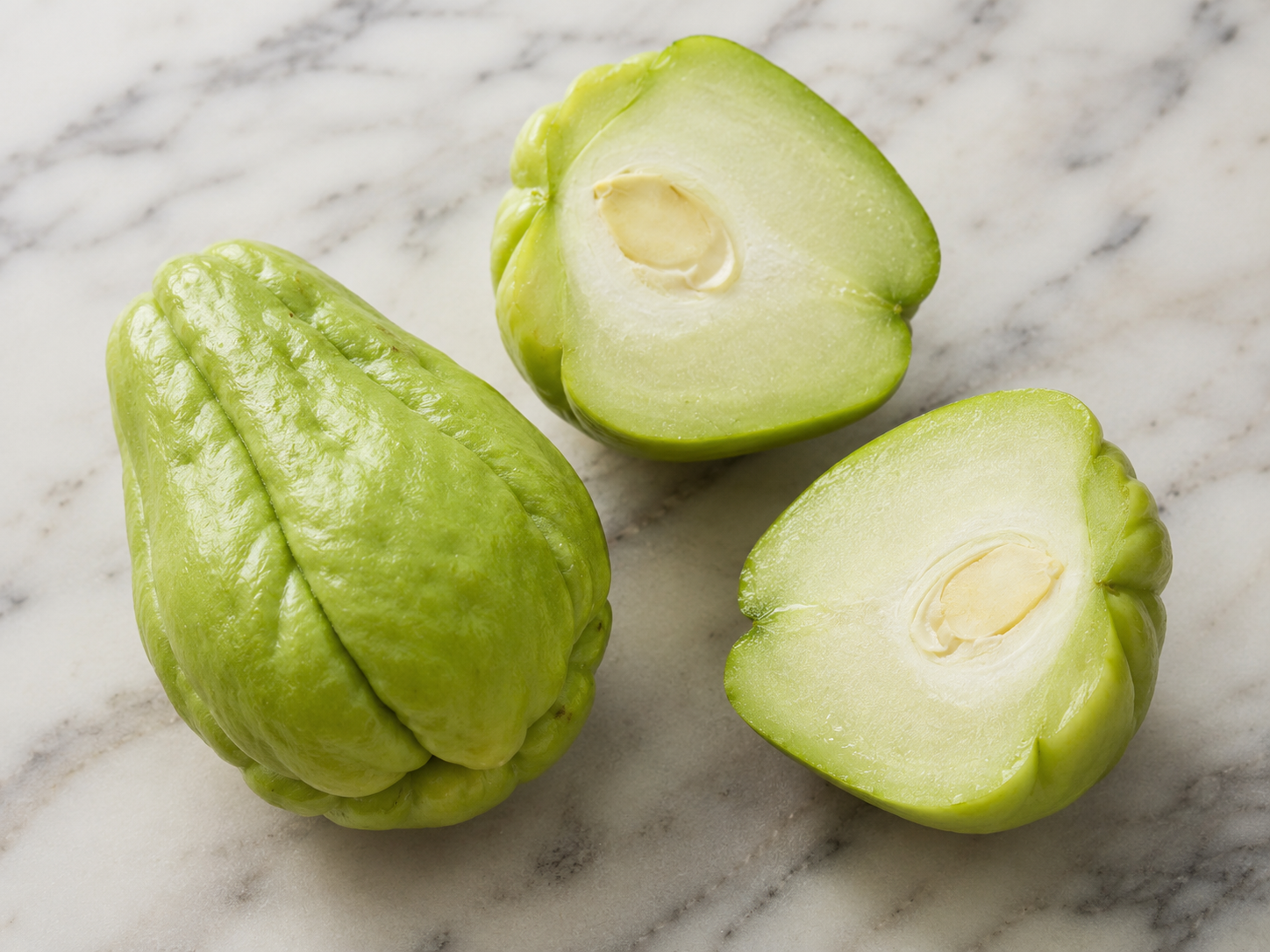
Chayote is a versatile, mild-flavored gourd packed with vitamin C, antioxidants, and fiber. Known by various names globally, such as mirliton or christophine, it can be eaten raw, roasted, or stir-fried. It offers significant health benefits, including supporting heart health and aiding digestion.
Walking through the produce section of a local market, you might overlook the small, pale green gourd sitting near the squash and peppers. This unassuming vegetable is chayote. While it remains relatively obscure in some Western kitchens, it serves as a dietary staple across Latin America, Asia, and the Caribbean.
Learning to prepare this vegetable opens up a world of culinary possibilities. Because it acts like a flavor sponge, it absorbs the spices and sauces of whatever dish you cook it in. It also provides a satisfying crunch that holds up incredibly well under heat.
This comprehensive guide covers everything you need to know about this remarkable ingredient. You will learn how to pronounce its name, discover its impressive nutritional profile, and explore step-by-step recipes to bring it into your own kitchen.
How do you pronounce chayote correctly?
If you want to impress your friends and local grocers, mastering the pronunciation is the first step. The word originates from the Nahuatl word “chayotli.”
To say it correctly, break it down into three syllables: chah-YO-teh. Emphasize the middle syllable. Avoid pronouncing the final “e” as a hard “ee” sound.
What are the top 7 health benefits of chayote?
Adding this super-squash to your weekly meal rotation provides serious nutritional advantages. Here are seven incredible health perks associated with eating chayote:
- Rich in antioxidants: It contains myricetin, an antioxidant known for its strong anti-inflammatory properties.
- High in Vitamin C: A single gourd provides roughly 26% of your daily recommended intake of Vitamin C, supporting immune health.
- Supports heart health: The vegetable contains compounds that help relax blood vessels, which can improve blood flow and reduce blood pressure.
- Aids in digestion: With high water content and plenty of dietary fiber, it promotes healthy digestion and prevents constipation.
- Promotes healthy weight management: One cup of raw chayote contains just 16 calories, making it a highly filling but low-calorie food choice.
- Regulates blood sugar: The low carbohydrate and high fiber ratio helps stabilize blood sugar levels after meals.
- Packed with folate: This makes it an excellent dietary choice for pregnant women, as folate is crucial for proper fetal development.
How do you cook chayote? Step-by-step recipes
This versatile veggie can be eaten raw in salads or cooked in various ways. Here is a simple, foolproof recipe for crispy roasted chayote to get you started.
Step-by-step roasted garlic chayote
This method highlights the vegetable’s natural sweetness and provides a tender, caramelized bite.
Ingredients:
- 2 fresh chayote squashes
- 2 tablespoons olive oil
- 3 cloves garlic, minced
- 1 teaspoon smoked paprika
- Salt and black pepper to taste
Step-by-step instructions:
- Prep the vegetable: Wash the gourds thoroughly under cold water.
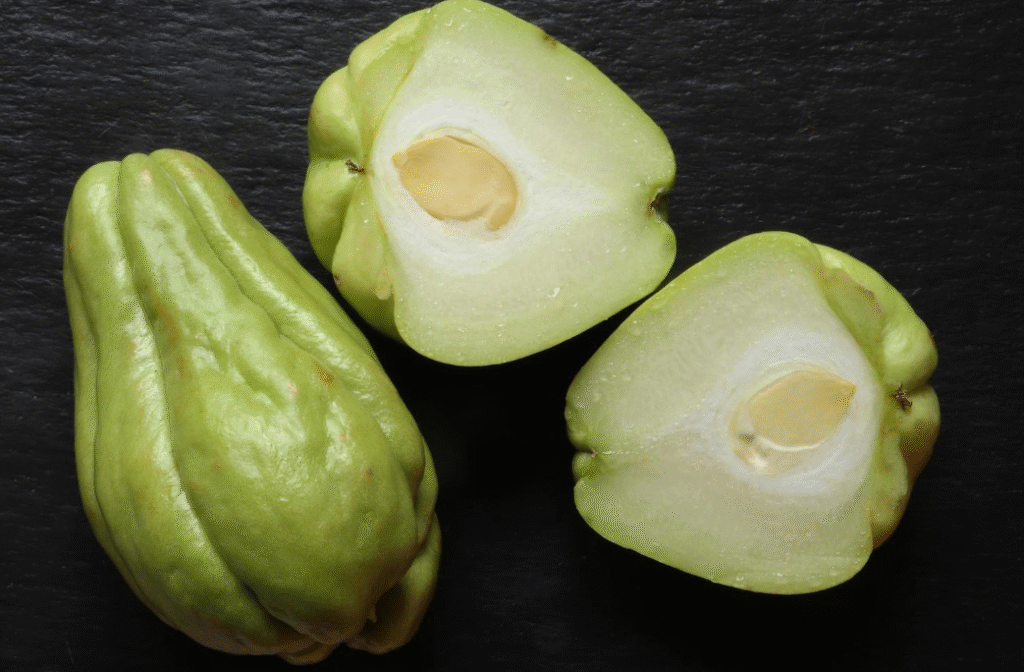
- Slice and core: Cut them in half lengthwise. Use a spoon to scoop out the flat, edible seed in the center. Slice the remaining flesh into half-inch cubes. You do not need to peel them unless the skin feels exceptionally tough.
- Season the cubes: Place the cubes into a large mixing bowl. Add the olive oil, minced garlic, smoked paprika, salt, and pepper. Toss well until every piece is evenly coated.
- Roast the squash: Spread the seasoned cubes in a single layer on a baking sheet lined with parchment paper.
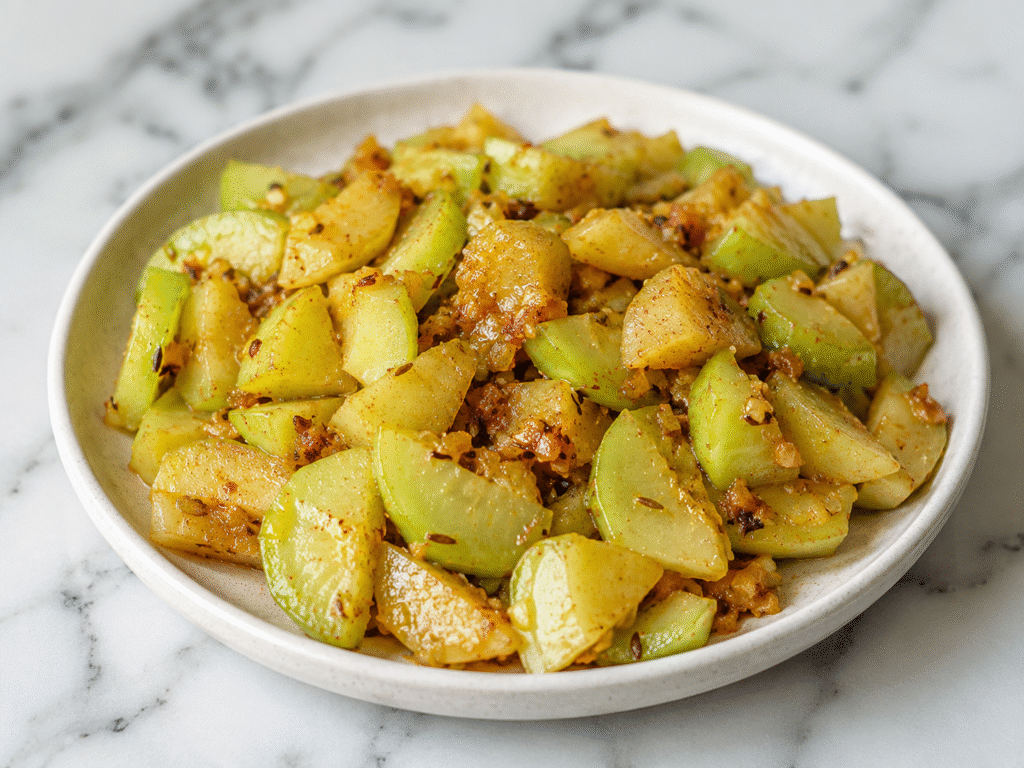
- Bake to perfection: Bake at 400°F (200°C) for 20 to 25 minutes. Toss them halfway through the cooking time to ensure they brown evenly. Serve warm as a healthy side dish.
What is chayote called in Urdu?
In Pakistan, you will rarely hear the term “chayote.” Instead, local markets and cooks commonly refer to it as “Lauki” (though that generally refers to bottle gourd) or more accurately as “Iskus.” Because it is not native to the region, many vendors simply refer to it as a type of imported “Kaddu” (squash) or “Chow Chow.”
What is chayote called in Hindi?
In Indian markets, particularly in the southern states where it is widely cultivated, the vegetable is universally recognized as “Chow Chow.” It is a staple ingredient in South Indian cuisine, frequently featuring in comforting stews like sambar or kootu. Shoppers looking for this ingredient in North India might also see it labeled as “Bangalore brinjal.”
What is the botanical and English name for chayote?
Botanists refer to this plant as Sechium edule. It belongs to the gourd family, Cucurbitaceae, which also includes melons, cucumbers, and pumpkins. In English-speaking regions, it goes by several colorful names. In the American South, particularly Louisiana, locals call it a “mirliton.” In other regions, you might see it labeled as a “vegetable pear” due to its distinct shape, or a “chocho.”
How is chayote used in Chinese cuisine?
In Chinese markets, you will find this ingredient labeled as “Fóshǒuguā,” which translates poetically to “Buddha’s hand gourd.” Chinese culinary traditions value the vegetable for its crisp texture. Cooks typically julienne the gourd and toss it into hot woks for fast stir-fries with garlic, ginger, and thinly sliced pork. It also features prominently in light, nourishing broths where it absorbs the savory flavors of the soup base.
How is chayote used in French cooking?
French gastronomy, particularly in the French Caribbean territories like Martinique and Guadeloupe, relies heavily on this squash. Francophones call it “Christophine.” The most famous preparation is Christophine au Gratin. Cooks boil the squash until tender, scoop out the flesh, mix it with rich béchamel sauce and local spices, stuff it back into the skin, and bake it under a thick layer of Gruyère cheese.
How do you select and store fresh chayote?
Picking the right produce ensures the best culinary results. Follow these simple steps to select and store your vegetables.
Step-by-step selection tips:
- Check the firmness: Squeeze the gourd gently. It should feel rock-hard, similar to an unripened apple.
- Inspect the skin: Look for an even, pale green color. Avoid any gourds with deep blemishes, soft spots, or heavy wrinkling, which indicate age and moisture loss.
- Examine the cleft: Check the deep indentation at the bottom of the vegetable. It should be tight and free of mold.
Step-by-step storage tips:
- Keep them unwashed: Do not wash the squash until you are ready to cook it, as excess moisture accelerates rot.
- Use a paper towel: Wrap the unwashed vegetable loosely in a dry paper towel.
- Refrigerate: Place the wrapped gourd in the crisper drawer of your refrigerator. Stored this way, it will remain fresh and firm for up to three weeks.
Chayote vs. regular squash: What is the difference?
While they belong to the same family, chayote behaves differently in the kitchen compared to yellow summer squash or zucchini.
First, the texture is significantly denser and crisper. While zucchini turns mushy when overcooked, chayote retains a pleasant, apple-like crunch even after boiling or roasting. Second, the flavor profile is much milder. It presents a subtle cross between a cucumber and a jicama, making it much more adaptable to aggressive spices and marinades than standard summer squash.
Elevate Your Culinary Repertoire
Chayote represents the perfect intersection of global culinary history and accessible nutrition. Whether you call it a mirliton, chow chow, or christophine, this resilient gourd deserves a spot in your kitchen. Head to your local grocery store, pick up a few firm, green gourds, and try roasting them tonight.
Frequently Asked Questions
Do you need to peel chayote before cooking it?
Young, tender chayote does not need to be peeled; the skin is entirely edible and softens upon cooking. However, larger, older gourds tend to develop a tough, leathery skin. If your squash feels deeply ridged and hard, use a vegetable peeler to remove the skin before slicing.
Can you eat chayote raw?
Yes, you can eat it raw. It has a crisp, refreshing texture similar to a water chestnut or jicama. Simply slice it thinly or julienne it, and toss it into salads with a bright citrus vinaigrette.
Can you eat the chayote seed?
Yes, the flat, white seed in the center of the gourd is entirely edible and highly nutritious. It has a mild, nutty flavor. Many cooks leave it in when roasting or boiling the squash.


