
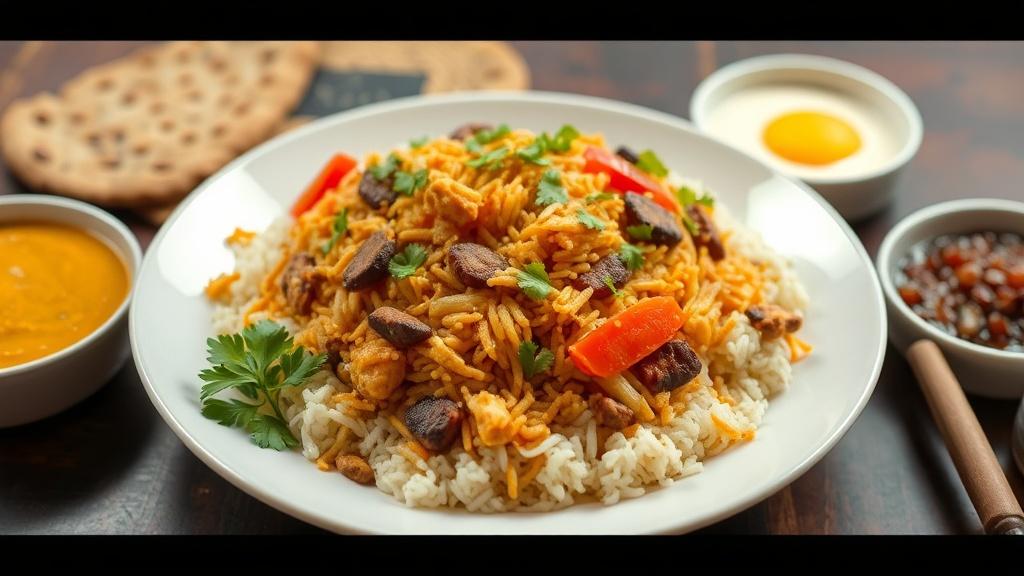
Biryani is more than a dish; it is a layered narrative of trade routes, royal kitchens, home fires, and Sunday feasts. Each bubble of rice carries a note of history, a memory of a market stall, or the hush of a dum-sealed pot in a family kitchen. This article traces those layers—ingredients, techniques, regional voices, and practical tips—so you can understand what makes a great biryani and how to recreate its magic at home.
Origins and evolution
The roots of this rice-and-meat creation reach back to Persian cuisine, where pilafs and seasoned rice dishes were already refined and celebrated. When Persian culinary ideas met the richly spiced kitchens of the subcontinent, a new identity emerged: rice layered with meat and aromatics, slow-cooked to a fragrant harmony.
Over centuries, royal households in Delhi, Lucknow, Hyderabad, and beyond adapted and perfected the dish, each court commissioning its own signature version. Local ingredients, climatic needs, and cultural preferences shaped the variety of techniques and flavors that we now group under the single name of biryani.
Persian roots and South Asian transformation
Travelers and traders brought saffron, dried limes, and technique across routes that connected Persia with the Indian subcontinent. The idea of cooking rice separately and assembling it with seasoned meat became a canvas for South Asian cooks to express regional tastes.
In many early adaptations, local spices such as cardamom, cinnamon, and cloves were applied more liberally, and methods like dum—a slow, sealed cooking—were embraced to capture steam and scents. The result was a dish that retained a disciplined structure while allowing for exuberant local flavors.
Royal kitchens and regional courts
Palace kitchens served as laboratories for biryani. In the Mughal courts, chefs refined layering techniques and experimented with marinades, aromatic waters, and finished garnishes. Records from those kitchens show meticulous attention to rice quality, grain separation, and timing—elements crucial to the final texture.
When regional courts adopted the dish, they incorporated local meat choices, produce, and fats. Coastal areas favored fish and coconut influences, while northern regions leaned into yogurt-curried meats and dried fruits. These adaptations produced the family of styles we now cherish.
What makes a biryani distinct
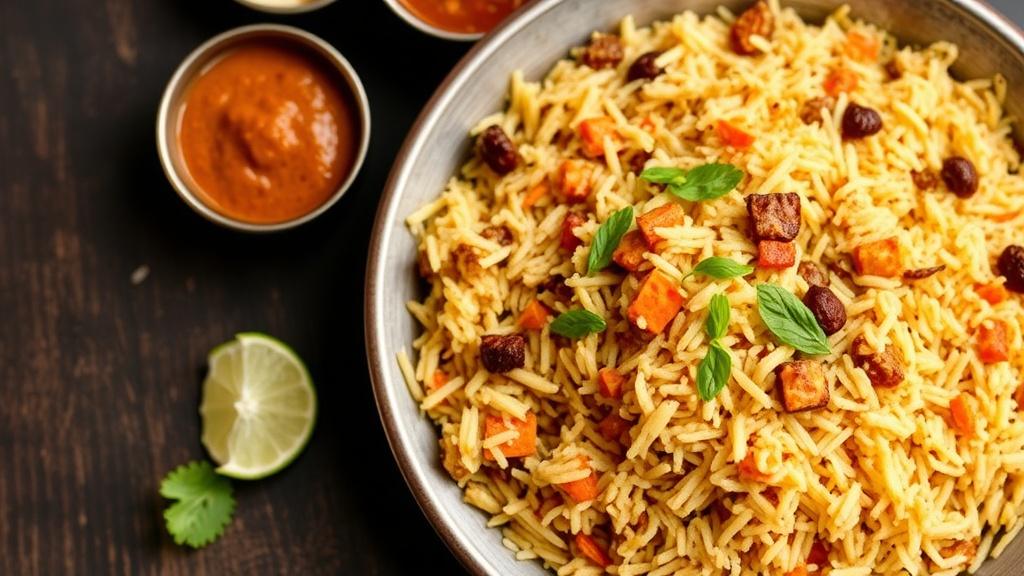
At its core, biryani is built on three pillars: properly cooked long-grain rice, intensely flavored protein or vegetables, and careful layering that allows steam to finish the dish. The interplay among those pillars determines whether the result is aromatic and fluffy or heavy and clumped.
Unlike a simple pilaf, biryani depends on contrast—crisp fried onions against tender meat, bright herbs against warm spices, and rice that is light yet richly infused. Attention to timing, temperature, and moisture makes the difference between good and unforgettable.
Rice selection and preparation
Long-grain Basmati rice is preferred for its slender grains and fragrant aroma, which remain distinct after cooking. A quality basmati expands lengthwise, keeping separation and delivering that cloud-like mouthfeel associated with the best plates.
Parboiling rice to the al dente stage before layering is a common technique. The grains will finish cooking in the steam released by the meat layer, and pre-parboiling prevents overcooked, mushy rice.
Meat, vegetables, and cooking fats
Traditionally, biryani includes marinated meats—goat, lamb, chicken, or beef—or coastal fish and prawns, depending on the region. Vegetables can stand in place of meat for vegetarian versions; hearty choices such as potatoes, cauliflower, or paneer work well.
Ghee remains a defining fat for many versions, lending a complex, luxurious aroma. In coastal or eastern recipes, coconut oil or mustard oil may be used, shifting the flavor profile significantly and beautifully.
Spice blends and aromatics
Spices are the architecture beneath the aroma: whole spices for warm background notes, powdered spices for depth, and fragrant additions like saffron or kewra water for the finishing flourish. The careful balance of these elements is what gives biryani its layered complexity.
Some spices serve a structural role—cardamom, cloves, and cinnamon adding warmth—while others are accent notes—mace or star anise giving subtle sweetness. Fresh herbs such as cilantro and mint inject brightness at the finish.
| Spice | Role | Typical use |
|---|---|---|
| Green cardamom | Fragrant, sweet warmth | Whole pods in rice/masala |
| Cloves | Pungent, spicy depth | Whole, sparingly |
| Cinnamon | Warm base note | Stick in rice & meat |
| Saffron | Aroma and color | Soaked in milk or water |
| Bay leaf | Woodsy, floral background | Whole leaf in rice layer |
Regional varieties and what sets them apart
The term biryani can mean very different things depending on the city or region you visit. The technique, the heat, the utensils, and the typical accompaniments all reflect local soil, commerce, and history.
Below are profiles of the major traditions, each with its own identity and loyal following.
Hyderabadi biryani
Hyderabadi style is known for its indulgent layering and robust use of spices, often finished with a sealed dum that traps aromatic steam. The biryani here frequently uses yogurt-marinated meat and a judicious use of saffron and rose or kewra water.
This version can be either kachchi (raw) biryani, where raw marinated meat cooks inside the layered rice, or pakki (cooked) biryani, where the meat is cooked before assembly. Both aim for grain separation and complex, integrated flavors.
Lucknowi (Awadhi) biryani
The Awadhi tradition, native to Lucknow, leans toward subtlety and refinement. Spices are used with restraint, and the meat is often cooked in a delicate gravy before being layered with rice for gentle steaming.
Perfumed waters and a lighter hand with chiles characterize this method, resulting in a dish that emphasizes aroma and texture rather than overt heat.
Kolkata biryani
Kolkata’s version reflects local tastes and historical circumstances, notably the use of potatoes and a lighter spice profile. Introduced by Awadhi cooks in the 19th century, this biryani adds boiled potatoes that absorb flavors and make the dish heartier on a budget.
The meat is usually cooked with a milder masala, and aromatic notes such as rose water and kewra are used sparingly to lend fragrance without overpowering the palate.
Malabar and southern coastal styles
In Kerala and coastal Karnataka, biryani incorporates coconut, curry leaves, and local fish varieties. The flavor leans toward tangy and peppery, often with a touch of sour tamarind or tomatoes, reflecting coastal influences.
These versions can be less reliant on saffron and more on toasted coconut and local spices, giving a distinctive coastal identity to the dish.
Ambur and Dindigul biryani (Tamil Nadu)
Tamil Nadu’s biryanis have a reputation for bolder, more direct spice and for using seared meat pieces with a dryer masala. Shorter, firmer-grain rice varieties may be used in some towns, producing compact, intensely flavored plates.
Vinegar or curd is sometimes introduced into the marinade, and the accompanying salan (a tangy gravy) is a common partner at the table.
Sindhi and Pakistani styles
Across Pakistan, biryani often shares the South Asian DNA but with regional accents—heftier gravies, pronounced use of tomatoes, and a generous hand with fried onions. Beef and mutton are more common in certain areas, while Karachi favors spicy, saucier plates.
Pakistani versions sometimes include a finishing of chopped mint and coriander, and the national palate tends to prefer pronounced heat and layered masalas.
Techniques: the art of steam and timing
Technique separates a good biryani from a merely tasty rice-and-meat dish. The objective is to finish the rice by steaming it along with the meat, while preserving grain integrity and infusing aroma throughout the pot.
Manipulating heat, sealing methods, and timing are central. The dum method—sealing the pot with dough or a tight lid and slow-cooking over low heat—ensures that steam circulates, marrying flavors without turning the rice mushy.
Layering and assembly
Layering is partly practical and partly symbolic. Rice and meat layers allow the flavors to mingle while retaining their identity; the top layer of rice often receives ghee, herbs, and saffron so the finish is fragrant and visually appealing.
Some cooks brown fried onions and scatter them between layers for textural contrast. Fresh herbs and a splash of citrus or fragrant water at assembly can brighten the final dish.
Sealing and steaming (dum)
Dum means slow cooking under steam. Chefs seal the pot to keep aroma and moisture in; that seal can be a ring of wheat dough, a heavy lid wrapped with a towel, or a tight metal fitting on a commercial vessel. The goal is gentle, even heat for the final stage.
Temperature control is crucial: too-hot heat will burn or overcook the bottom layer; too low and the meat may not finish cooking. Many home cooks use a heavy griddle beneath the pot to diffuse flame and maintain steady heat.
Modern adaptations: oven and pressure methods
Oven-baked biryani offers dependable, even heat and is convenient for larger batches. A well-sealed baking dish can replicate the dum environment without constant supervision. Microwave and stovetop shortcuts exist, but they rarely capture the same depth.
Pressure-cooker biryani is a pragmatic solution for weeknight cooks, reducing time while concentrating flavors. Adjustments in water and rice parboil stage are needed to avoid a sticky result, but the flavor can be excellent when calibrated correctly.
Step-by-step: a practical dum biryani method
Below is a reliable method that balances approachability with authenticity. It assumes you have access to basmati rice and a heavy-bottomed pot; quantities will scale depending on serving size.
Read through the whole sequence before starting. Timing and coordination between rice parboiling and final assembly matter more than exact spice weights; learn to trust aroma and texture.
Marinate the meat: Combine yogurt, minced ginger-garlic, turmeric, red chili, garam masala, salt, and a bit of lemon juice. Let the meat marinate for at least 2 hours, ideally overnight.
Fry onions: Thinly slice onions and fry slowly in ghee until golden brown and deeply caramelized. Reserve some for garnish and fold the rest into the meat or sprinkle between layers.
Parboil rice: Rinse basmati rice until water runs clear. Boil in salted water with whole spices (cardamom, cinnamon, bay leaf) until the grain is about 70% cooked, then drain.
Layer and flavor: In a heavy pot, spoon an initial thin layer of rice, then a layer of marinated meat, then rice again. Scatter fried onions, cilantro, mint, saffron-infused milk, and a drizzle of ghee between layers.
Seal and steam: Seal the pot with dough or a tight-fitting lid and cook over a low flame using a heat diffuser for 25–40 minutes, depending on quantity. Rest for 10 minutes before opening to preserve steam.
Serving, accompaniments, and etiquette
Biryani is rarely served alone. Cooling yogurt-based raita, tangy salans, crunchy papads, and pickled chutneys provide counterpoints that brighten and balance. Each accompaniment plays a role in texture and taste contrast.
At communal meals, platters of biryani are often presented with the top layer left whole until served; the first scoop is ceremonious. Sharing and passing bowls of raita and pickles is part of the ritual.
Raita and salan: balancing sauces
Raita—a yogurt relish with cucumber, onion, or herbs—adds fatty acidity and cooling relief, especially with spicy biryanis. A simple raita can be made by whisking yogurt with salt, chopped cucumber, and a pinch of roasted cumin.
Salan is a tangier, spicy curry-like sauce common with Hyderabadi biryani. Its complexity—pumpkin seeds, tamarind, roasted coconut—lifts the rice and provides a lush finishing dip.
Accompaniments and beverage pairing
Light salads, lemon wedges, and crisp papad or chips complete the plate. For beverages, unsweetened lassi or a lightly spiced chai complements the meal, while beer or wine pairings can work if chosen to cut through richness.
When serving guests, offer a spectrum of heat and texture so each diner can build bites to their preference—some like the full spiced experience; others prefer cooling raita with each mouthful.
Troubleshooting and tips
Even experienced cooks occasionally face common problems: sticky rice, undercooked meat, or a soggy texture. Understanding the causes helps you fix a dish either while it cooks or after plating.
Below are frequent issues and practical fixes to keep on hand for your next pot.
| Problem | Likely cause | Fix |
|---|---|---|
| Sticky, gummy rice | Overcooked during parboil or too much water | Use less water next time; gently spread cooked rice on a tray to cool grains before layering |
| Undercooked meat in dum | Meat was too large or dum time insufficient | Cut meat into smaller pieces; pre-cook until almost done before layering |
| Soggy bottom layer | Excess moisture or high heat causing steam condensation | Use a heat diffuser; reduce added liquids; rest pot before opening |
| Bitter or burnt taste | Burnt spices or scorched bottom | Remove scorched layer; cook over lower heat and stir only when necessary |
Biryani in everyday life and celebration
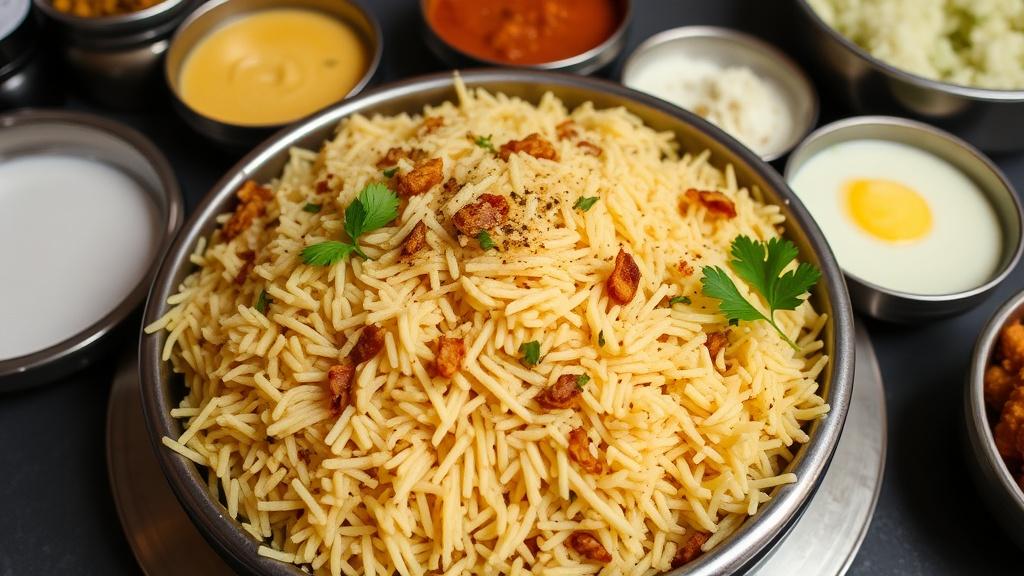
In many families, biryani signals a celebration: weddings, Eid, birthdays, or Sunday gatherings. The act of making it often becomes a communal ritual, with different family members assigned tasks from frying onions to washing rice.
I remember my first attempt at a large family biryani. Three generations packed a tiny kitchen; someone tended the rice, another managed the meat, and my job was the saffron milk. Watching the pot finally opened to a cloud of steam felt like the payoff of a small, shared adventure.
Street food and restaurants
Street vendors and neighborhood restaurants have their own standards: speed, consistency, and bold flavor. You’ll find plates served with a tangy chutney or a simple salad, designed for quick eating and maximum satisfaction.
In contrast, upscale restaurants may emphasize provenance of rice, single-origin spices, and plating finesse. Both approaches honor the dish but cater to different dining expectations.
Health, variations, and modern trends

Traditional biryani is indulgent, but modern cooks have adapted it for dietary preferences and health concerns. Leaner meats, less ghee, more vegetables, and baked or air-fried accompaniments are common modifications.
Vegetarian and vegan versions have proliferated, using vegetables, legumes, and meat substitutes while preserving layering technique and aromatic depth. Whole-grain or portion-controlled plates help those watching carbohydrates without abandoning flavor.
Contemporary fusion and global takes
Chefs around the world reinterpret biryani with local ingredients—Mexican chiles, West African peanuts, or Mediterranean herbs—creating hybrids that retain the dish’s spirit of layering and aroma. Purists may object, but experimentation keeps culinary traditions alive and relevant.
Another trend is the deconstructed biryani, where components are plated separately to highlight textures and allow diners to combine them. These versions are visually striking and useful in fine-dining contexts.
Buying biryani: what to look for
If you’re ordering from a restaurant or buying ready-to-eat, inspect a few key signs of quality: distinct, separate grains of rice; a glossy but not oily finish; and a fragrance that balances spices without smelling solely of onions or grease.
Ask whether the meat was cooked before assembly or cooked in the dum; each method yields different textures. For a safer bet with robust flavor, look for places that fry onions slowly—that step is time-consuming and signals care.
Packaging and reheating tips
When transporting, ensure the container seals tightly to preserve steam and prevent drying. If refrigerated, reheat gently with a splash of water or broth and a few minutes under a lid to revive the aroma and moisture.
Avoid microwaving without covering; the rapid, uneven heat will change texture. Steaming or oven warming gives better results and preserves the layers’ integrity.
My kitchen experiments and a few real-life tips
Over years of testing, I learned to treat fried onions like currency—saving a portion for garnish and another to mix into the meat for depth. That division creates crunch on top and flavor inside, a small trick that elevates the overall experience.
I also recommend practicing restraint with liquid aromatics: a few drops of kewra or a tiny splash of saffron milk go further than you expect. Strong flavors should be introduced gently, not shouted from the lid.
Scaling for a crowd
When cooking for thirty instead of three, choose an oven or a series of sealed pots rather than one giant pan. Larger pots can be harder to heat evenly, and misjudged dum time will spoil a dozen servings instead of a single pot.
Coordinate tasks: have the rice parboiled and meat fully cooked before assembly. Delegate the finishing touches—herbs, fried onions, and serving—to a helper so you can focus on timing the dum stage properly.
At its best, biryani rewards patience, precision, and a willingness to learn from each pot. It holds memory in its grains, hospitality in its serving, and craftsmanship in its layers. Whether you savor a plate at a roadside stall, a palace, or your own dining table, the experience is never just about hunger; it’s about connection—between spice and rice, between cook and diner, and between the past and the present.

