
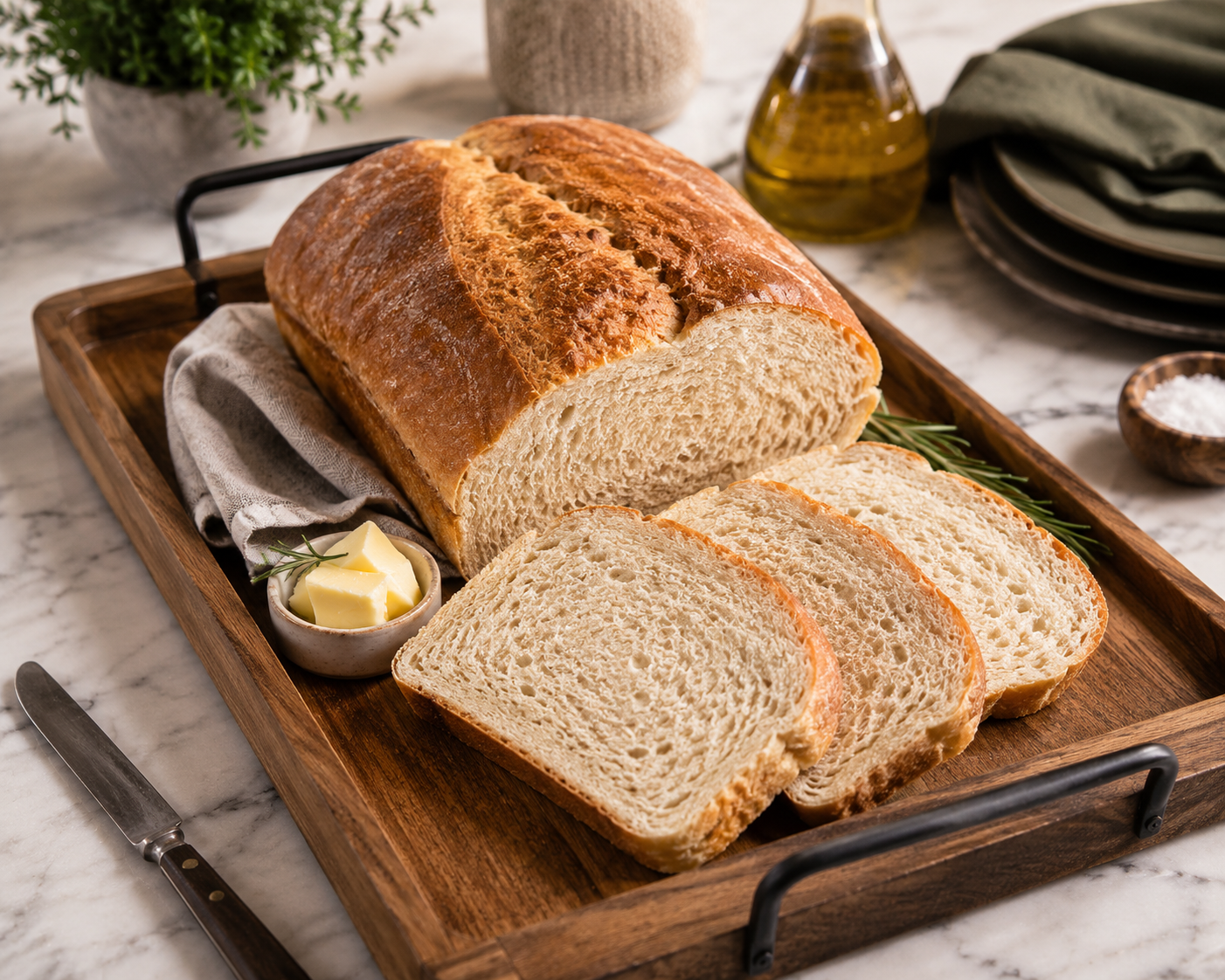
A perfect sourdough sandwich bread recipe combines active sourdough starter, warm milk, softened butter, and bread flour to create a soft, tightly-crumbed loaf. Achieving this soft texture requires enriching the dough with fats, kneading thoroughly to build gluten strength, and allowing a slow, controlled fermentation process.
Baking a beautiful artisan sourdough boule is incredibly rewarding. But when it comes time to make a peanut butter and jelly sandwich for lunch, those large holes and shattering crusts become a messy liability. You need something softer, more uniform, and easy to slice.
Transitioning from a rustic artisan loaf to a delicate sandwich bread can intimidate many home bakers. The fear of baking a dense, heavy brick keeps people buying store-bought bread. However, achieving that pillowy bakery-style texture in your own kitchen is entirely possible when you understand the mechanics of enriched dough.
This comprehensive guide breaks down the ultimate sourdough sandwich bread recipe. You will learn the exact techniques for softening your crust, managing your fermentation schedule, and preventing the dreaded gummy crumb. Grab your flour and let us dive into the methods that will transform your daily lunches.
Soft Sourdough Sandwich Bread
Ingredients
Method
- Mix the Dough: In a large mixing bowl or stand mixer bowl, combine 100g of active starter, 250g of warm milk, 50g of melted butter, 30g of honey, 10g of salt, and 500g of bread flour. Knead Thoroughly: Use a stand mixer with a dough hook attachment on medium speed for 8-10 minutes. The dough should fully pull away from the sides of the bowl and successfully pass the windowpane test. Bulk Fermentation: Place the dough in a lightly greased bowl, cover it, and let it rise at room temperature until it increases in volume by approximately 50-75% (approx. 4-6 hours depending on your climate). Shape the Loaf: Turn the dough onto a lightly floured work surface. Gently flatten it into a rough rectangle, roll it tightly into a stable log, and tuck the ends neatly underneath. Final Proof: Transfer the shaped dough log into a greased 9×5-inch loaf pan. Cover and let it rise until the dough beautifully crowns about 1 inch above the rim of the pan. Bake: Preheat your oven to 375°F (190°C). Bake for 40 to 45 minutes until the top turns a deep golden brown and the internal temperature reaches at least 190°F (87°C). Cool Completely: Remove from the oven and cool completely on a wire rack for 2-3 hours before slicing to avoid any gumminess.
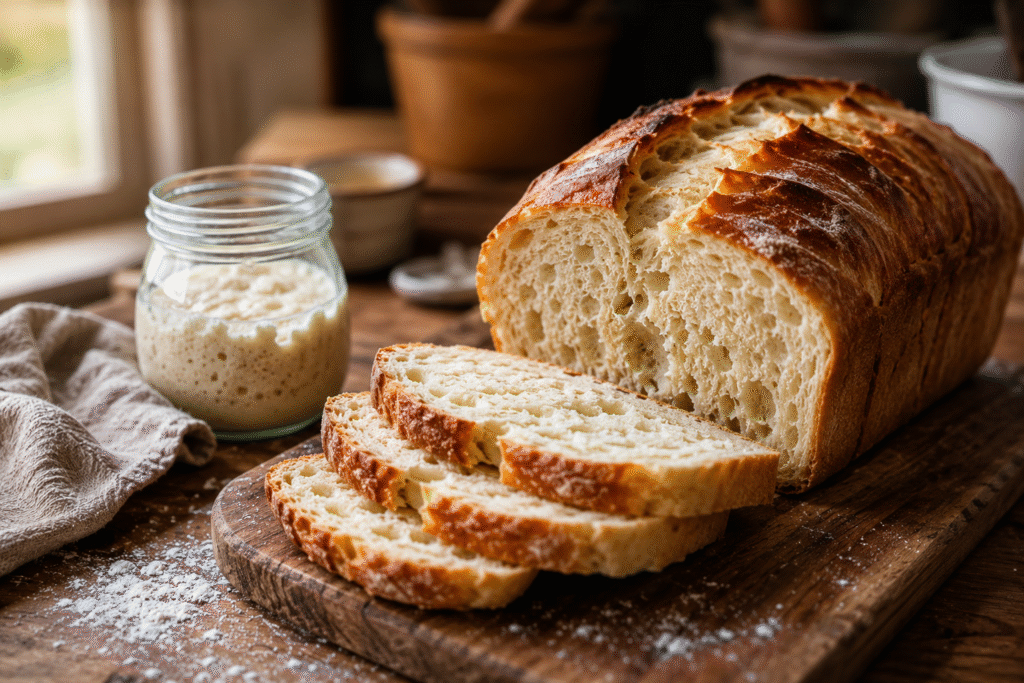
Why This is the Best Sourdough Sandwich Bread Recipe You’ll Ever Bake
Many recipes online promise a soft loaf but deliver a dense, sour brick. This sourdough sandwich bread recipe stands out because it balances the tang of wild yeast with the tenderizing properties of milk and butter.
You get the deep, complex flavor profile of traditional sourdough without sacrificing the squishy texture required for a great sandwich. Furthermore, this method is highly adaptable. You can tweak the hydration levels slightly based on your climate, making it a reliable staple for your weekly baking routine.
The Secret to Crafting a Truly Soft Sourdough Sandwich Bread
Achieving the perfect balance of softness and flavor in sourdough sandwich bread requires attention to detail and a few specific techniques. Here’s how you can craft a reliably tender loaf every time:
- Choose the Right Starter
A well-fed and active sourdough starter is the foundation of your bread. Feed your starter at least 4-6 hours before mixing your dough to ensure it’s bubbly and at its peak. - Add Milk for Tenderness
Incorporating milk into your dough provides extra fat and protein, which contribute to a softer crumb. You can use whole milk for the best results, or substitute with a non-dairy milk if needed. - Butter is Your Friend
Adding softened butter enriches the dough, making it more pliable and enhancing the tender texture of the finished bread. - Mind the Hydration
Aim for a slightly lower hydration level than traditional rustic sourdough breads. This helps maintain structure while delivering a pillow-like loaf. - Knead for Structure
Proper kneading is essential for gluten development. Whether you use a stand mixer or knead by hand, ensure the dough becomes smooth and elastic. - Give It Time
Allow for a bulk fermentation period that’s long enough for the flavors to develop but not so lengthy that the dough over-ferments. This usually means 4-6 hours at room temperature, depending on your climate. - Shape with Care
Gently shaping the dough without deflating its structure is key. Use a light hand to form it into a loaf, maintaining its airiness. - Proof to Perfection
Final proofing should allow the dough to rise until it’s just about doubled in size. Over-proofing can lead to a dense loaf, so keep an eye on it. - Bake with Steam
Creating steam in the first few minutes of baking helps produce a tender crust. You can use a tray of water or bake with a covered pan to trap moisture effectively.
By following these steps, you’ll master the delicate balance of a soft yet flavorful sourdough sandwich bread—perfect for any filling or spread. Enjoy the process and the delicious results!
Master the Best Sourdough Sandwich Bread Recipe with Starter
Creating sourdough bread with a starter adds depth of flavor and a delightful tang. Follow these steps to ensure your bread turns out deliciously soft and airy:
- Prepare Your Starter
Feed your sourdough starter 6-12 hours before baking, ensuring it’s active and bubbly. A healthy starter is the key to achieving a great rise and robust flavor. - Measure Your Ingredients
Accuracy matters, so use a kitchen scale to measure flour, water, starter, salt, and optional ingredients like honey or oil for added softness. - Mix the Dough
Combine the ingredients in a large bowl until no dry flour remains. Knead gently or use the stretch-and-fold technique to develop gluten without overworking the dough. - Bulk Fermentation
Allow the dough to rest in a covered bowl at room temperature. Perform stretch-and-folds every 30-60 minutes during this phase to build strength and structure. - Shape and Proof
Shape the dough into a loaf and place it into a greased loaf pan. Cover it and proof the dough until it’s risen slightly below the edge of the pan—this ensures an even rise during baking. - Bake with Steam
Create steam during the baking process by placing a tray of water in the oven or using a Dutch oven to trap moisture. Bake at 375°F (190°C) for 35-40 minutes until golden brown. - Cool Before Slicing
Allow the bread to cool completely on a wire rack to set the crumb and prevent gumminess. Slicing too soon may compromise its texture.
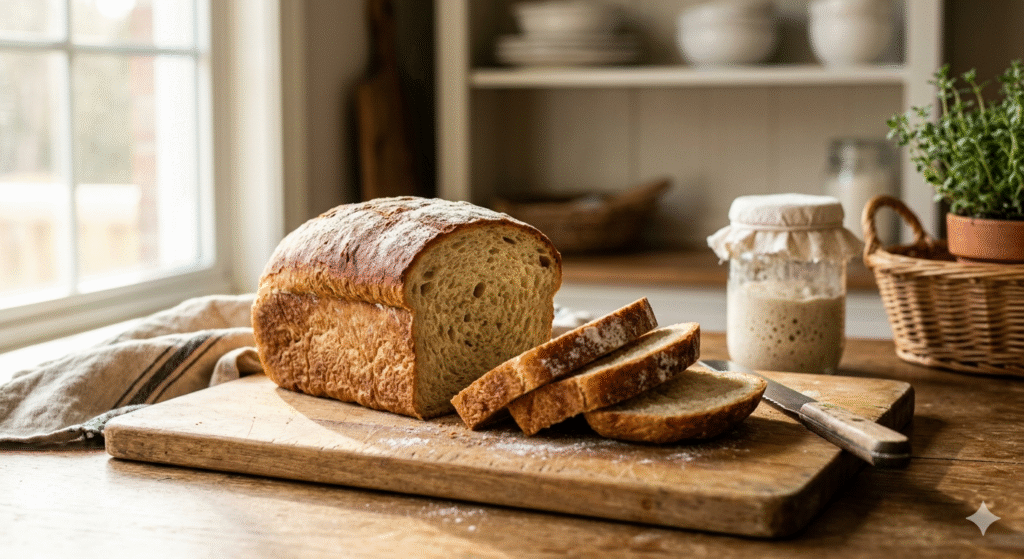
By mastering these steps, you’ll create a perfectly soft, flavorful sandwich bread that pairs beautifully with any spread or topping. Happy baking!
No Starter? Try This Sourdough Sandwich Bread Recipe with Yeast
If you are a beginner looking for a shortcut or you simply want more predictable results, a hybrid approach works wonders. You can create a fantastic sourdough sandwich bread recipe by combining sourdough discard (for flavor) with a small amount of commercial active dry yeast (for lifting power).
This method significantly cuts down the bulk fermentation time. The commercial yeast handles the heavy lifting of expanding the dough, while the sourdough discard imparts that signature tangy flavor. It is a highly reliable option for those who want immediate results without waiting 12 hours for a wild yeast rise.
Sourdough on Your Schedule: Overnight Sourdough Sandwich Bread
Time management is one of the biggest hurdles in natural fermentation. Fortunately, you can manipulate temperature to make baking fit your lifestyle.
After mixing and shaping your dough, place the bread pan in the refrigerator for an overnight cold proof, also known as a cold retard. The cold temperature drastically slows down the yeast activity. This not only allows you to bake the loaf fresh the next morning, but it also deepens the flavor development. The lactic and acetic acids have more time to develop, giving your bread a richer, more pronounced sourdough tang.
Quick Baking: How to Make Same Day Sourdough Sandwich Bread
If you despise long waiting periods and want fresh bread by dinnertime, you can expedite the process. A same-day sourdough sandwich bread recipe requires a very warm environment and a high percentage of active starter.
By keeping your dough at an ambient temperature of around 80°F (26°C), you can accelerate the bulk fermentation. You will mix the dough in the morning, let it rise rapidly in a warm spot, shape it by early afternoon, and bake it before dinner. The flavor will be milder than a cold-fermented loaf, but the texture remains impeccably soft.
Elevate Your Crust: The Artisan Sourdough Sandwich Bread Recipe Twist
Some bakers want the softness of a sandwich loaf but still crave a slightly rustic, bakery-style appearance. You can give your standard loaf an artisan twist with a few simple modifications.
Try substituting 20% of your white bread flour with whole wheat or rye flour to introduce an earthy depth. Before baking, brush the top of the loaf with an egg wash and sprinkle it with rolled oats or sesame seeds. You can also introduce a small pan of boiling water into the bottom of your oven during the first ten minutes of baking. The steam will give the top crust a beautiful, slightly chewy artisan gloss.
Step-by-Step Guide: Perfecting Your Sourdough Sandwich Bread Recipe
Follow these core steps to execute this recipe flawlessly:
- Mix the Dough: Combine 100g of active starter, 250g of warm milk, 50g of melted butter, 30g of honey, 10g of salt, and 500g of bread flour in a bowl.
- Knead Thoroughly: Use a stand mixer with a dough hook on medium speed for 8-10 minutes. The dough should pull away from the sides of the bowl and pass the windowpane test.
- Bulk Fermentation: Cover the dough and let it rise at room temperature until it increases in volume by about 50-75%.
- Shape the Loaf: Turn the dough onto a lightly floured surface. Gently flatten it into a rectangle, roll it tightly into a log, and tuck the ends underneath.
- Final Proof: Place the shaped dough into a greased 9×5-inch loaf pan. Cover it and let it rise until the dough crowns about an inch above the rim of the pan.
- Bake: Bake at 375°F (190°C) for 40 to 45 minutes until the top is deep golden brown and the internal temperature reaches 190°F.
Pro Tips to Avoid Gummy or Heavy Sourdough Bread
A common complaint among new bakers is cutting into a loaf only to find a gummy, wet interior.
First, ensure your dough is fully baked. Always use a digital thermometer to verify the center reaches at least 190°F (87°C).
Second, you must let the bread cool completely. Sourdough continues to bake and set from residual heat even after it leaves the oven. Cutting into a hot loaf releases the trapped steam, causing the starches to instantly gelatinize and turn gummy. Wait at least two to three hours before slicing.
Creative Sourdough Sandwich Ideas to Make the Most of Your Loaf
Once you have mastered your ideal sourdough sandwich bread recipe, it is time to put it to use.
Toast thick slices for an elevated avocado toast topped with chili flakes and a poached egg. Use it to build the ultimate grilled cheese, layering sharp cheddar and gruyere; the sturdy but soft crumb toasts beautifully in a buttery skillet. It also serves as the perfect foundation for a classic BLT, holding the juicy tomatoes and crisp bacon securely without tearing.
Conclusion: Start Baking Your Perfect Loaf Today
Mastering a soft, sliceable sourdough loaf fundamentally changes how you approach daily meals. By controlling your fermentation schedule, enriching your dough with the right fats, and practicing patience during the cooling process, you can ditch the grocery store bread aisle forever. Start feeding your starter today, gather your ingredients, and enjoy the unmatched satisfaction of slicing into your own freshly baked bread.
Frequently Asked Questions
How long does it take to make sourdough sandwich bread?
Depending on your kitchen’s temperature, the entire process takes between 12 and 24 hours. The active, hands-on time is only about 20 minutes, while the rest is passive fermentation and baking.
Can I freeze sourdough sandwich bread?
Yes. Let the loaf cool completely, slice it, and place the slices in an airtight freezer bag. It will stay fresh in the freezer for up to three months. You can toast the slices directly from frozen.
Why did my sandwich bread collapse in the oven?
A collapsed loaf usually indicates over-proofing. If the dough rises too much in the loaf pan during the final proof, the gluten strands weaken and can no longer support the structure. Next time, bake the loaf a bit sooner, just as it crowns the rim of the pan.


