
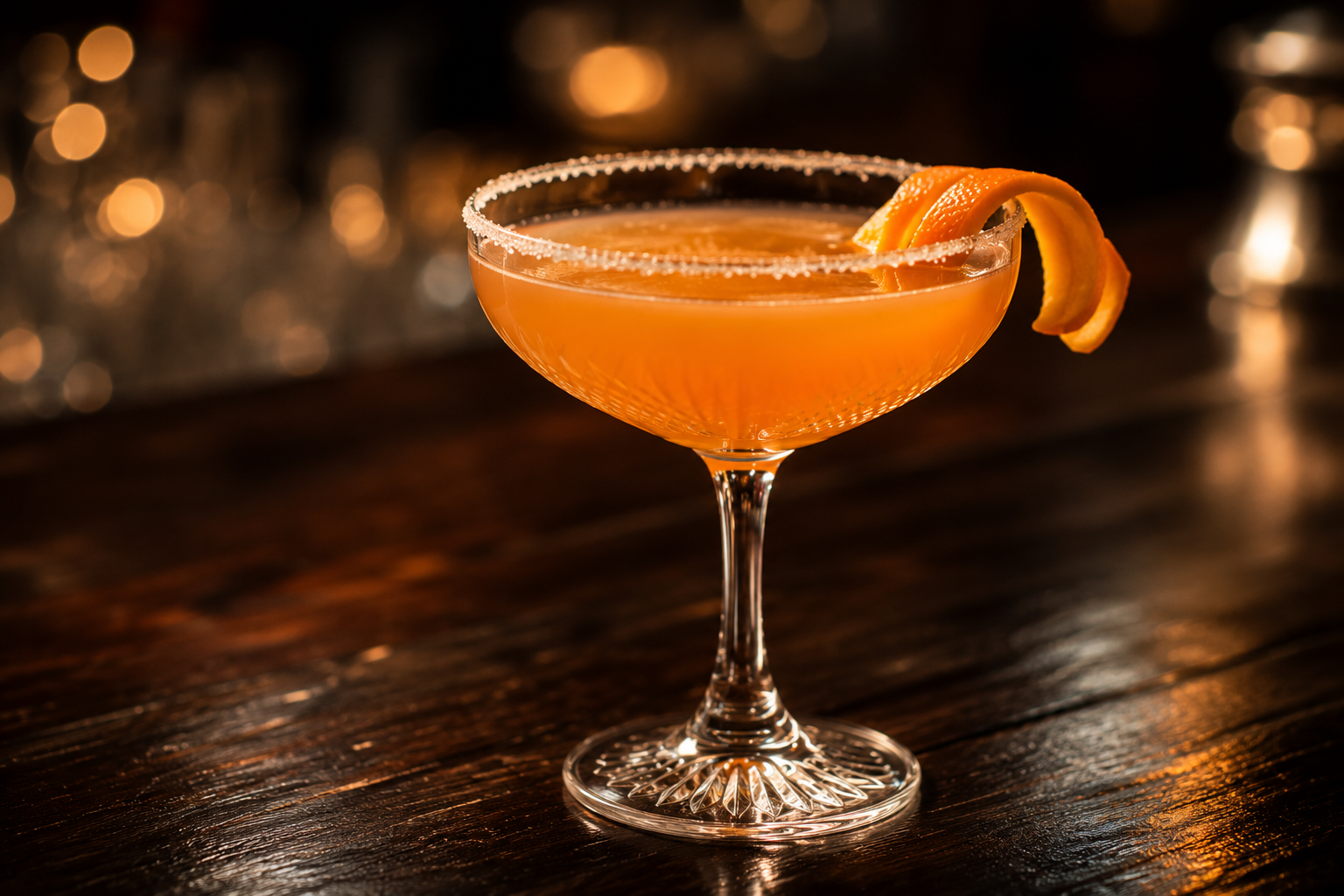
A classic sidecar recipe requires three simple ingredients: cognac, orange liqueur (like Cointreau), and fresh lemon juice. Shake the ingredients with ice, strain into a chilled coupe glass with a sugared rim, and garnish with an orange twist for a perfectly balanced, sweet-and-sour cocktail.
Mastering the art of mixology often starts with the classics. Among the elite tier of vintage cocktails, the Sidecar holds a special place. It strikes a delicate balance between the rich warmth of cognac, the bright citrus punch of orange liqueur, and the tart crispness of fresh lemon juice. Getting that balance right requires understanding the ingredients and the precise techniques that bring them together.
Many home bartenders feel intimidated by classic cocktails, assuming they require complex syrups or rare spirits. The truth is quite the opposite. The beauty of this drink lies in its profound simplicity. With just a few high-quality bottles on your bar cart, you can recreate a cocktail that has graced the menus of the world’s finest hotel bars for a century.
Classic Sidecar Recipe Card
Ingredients
Method
- Rim the Glass: Aik fresh lemon wedge ko chilled coupe glass ki outer rim par lagayein. Phir glass ke geele hissay ko superfine white sugar ki shallow plate mein dip karein taake aik crisp layer ban jaye. Glass ko aik taraf rakh dein.
- Combine Ingredients: Cocktail shaker ke andar 2 ounces (60 ml) Cognac, 1 ounce (30 ml) orange liqueur, aur ¾ ounce (22.5 ml) taaza lemon juice daalein.
- Ice and Shake: Shaker ko bade aur solid ice cubes se achhi tarah bhar dein. Shaker ko tightly band karein aur 10 se 12 seconds tak zor se shake karein jab tak shaker bahar se bilkul frosty na ho jaye.
- Strain and Serve: Hawthorne strainer aur aik fine-mesh cone strainer ka use karte hue liquid ko double-strain karein aur pehle se prepare kiye gaye sugar-rimmed coupe glass mein daalein taake ice ke chote tukde ya pulp drink mein na jayein.
- Garnish: Orange twist ke essential oils ko drink ke upar squeeze (express) karein aur use glass ke andar drop kar dein.
- Pro Mixology Tip: Sugar ko hamesha glass ke sirf bahar wale hissay par lagayein. Agar sugar drink ke andar chali gayi, to yeh 2:1:0.75 ka precision ratio kharab kar degi aur cocktail ka actual balance bigad jayega.
Why This Classic Sidecar Recipe Stands the Test of Time
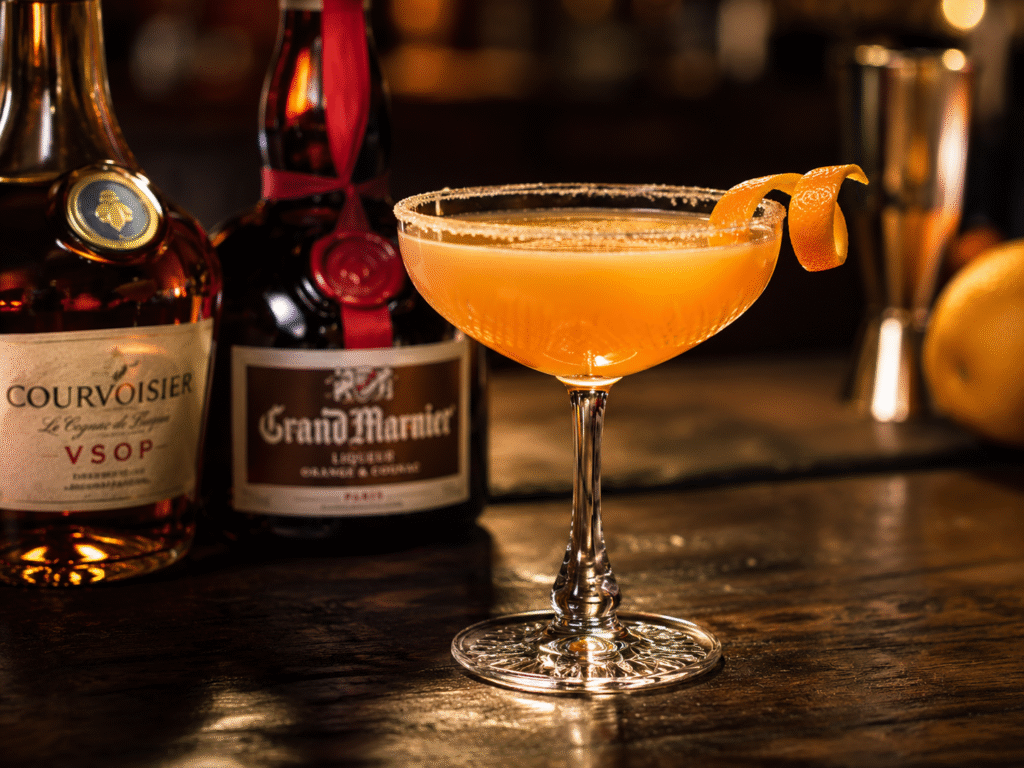
The origins of the Sidecar date back to the end of World War I, with both Paris and London claiming its invention. The Ritz Hotel in Paris often takes the credit, naming the drink after an eccentric American army captain who was regularly driven to the bar in a motorcycle sidecar. Regardless of its exact birthplace, the classic sidecar recipe has survived for over a century because of its flawless flavor architecture.
It belongs to the “daisy” family of cocktails—a traditional template consisting of a base spirit, a citrus juice, and a sweetener. The interplay between the deep, oaky notes of the cognac and the bright acidity of the lemon creates a complex flavor profile that appeals to a wide variety of palates. It is sophisticated enough for a formal dinner party, yet simple enough to shake up on a casual Friday evening.
The Perfect Sidecar Cocktail Ingredients for a Balanced Drink
A cocktail with only three components leaves no room to hide subpar ingredients. To craft a top-tier drink, you need to select your bottles carefully.
- Cognac: This specific type of French brandy forms the foundation of the drink. Look for a VS (Very Special) or VSOP (Very Superior Old Pale) cognac. These classifications offer the right mix of fruit notes and barrel aging without breaking the bank.
- Orange Liqueur: Cointreau is the traditional choice for a sidecar recipe. Its clean, crisp orange flavor and moderate sweetness perfectly bridge the gap between the liquor and the citrus.
- Fresh Lemon Juice: Never use bottled lemon juice. The essential oils and vibrant acidity of freshly squeezed lemons are absolutely critical to achieving the correct flavor profile.
- Sugar: A superfine white sugar is ideal for coating the rim of the glass, providing a sweet contrast to the tartness of the drink.
Step-by-Step: Easy Sidecar Recipe for Beginners and Pros
Making this drink requires basic shaking techniques. Follow these clear steps to execute an easy sidecar recipe at home.
- Prepare the glass: Run a lemon wedge along the outer rim of a chilled coupe glass. Dip the moistened edge into a shallow plate of superfine sugar to create an even coating. Set the glass aside.
- Measure the ingredients: Into a cocktail shaker, pour 2 ounces of cognac, 1 ounce of orange liqueur, and 3/4 ounce of fresh lemon juice.
- Add ice: Fill the shaker generously with large, solid ice cubes. Avoid crushed ice, which dilutes the drink too quickly.
- Shake vigorously: Seal the shaker and shake hard for 10 to 12 seconds. The outside of the shaker should feel frosty. This chills the liquid, properly dilutes the alcohol, and aerates the mixture.
- Strain: Double-strain the liquid using a Hawthorne strainer and a fine-mesh strainer into your prepared, sugar-rimmed glass. This removes any small ice shards or lemon pulp.
Master the Ratios: Sidecar Recipe in ml for Precision Bartending
While ounces are common in American bartending, using milliliters provides unparalleled accuracy. For a precise sidecar recipe in ml, use the following measurements:
- 60 ml Cognac
- 30 ml Orange Liqueur (Cointreau)
- 22.5 ml Fresh Lemon Juice
Using a jigger with exact milliliter markings ensures that you maintain the exact 2:1:0.75 ratio. This specific proportion allows the spirit to shine while keeping the sweetness and acidity perfectly tethered to one another.
The Official Standard: Sidecar Recipe IBA (International Bartenders Association) Guidelines
For professional bartenders seeking the globally recognized standard, the International Bartenders Association offers strict guidelines. The official sidecar recipe IBA specification uses a slightly different ratio known as the “French School” method, which favors equal parts of the modifiers.
The IBA sidecar recipe calls for:
- 50 ml Cognac
- 20 ml Triple Sec
- 20 ml Fresh Lemon juice
This version yields a slightly drier and more spirit-forward drink. If you prefer a cocktail that highlights the robust, woody notes of the brandy over the sweet citrus elements, the IBA ratio is an excellent framework to follow.
Elevating the Flavor: Crafting a Sidecar with Grand Marnier
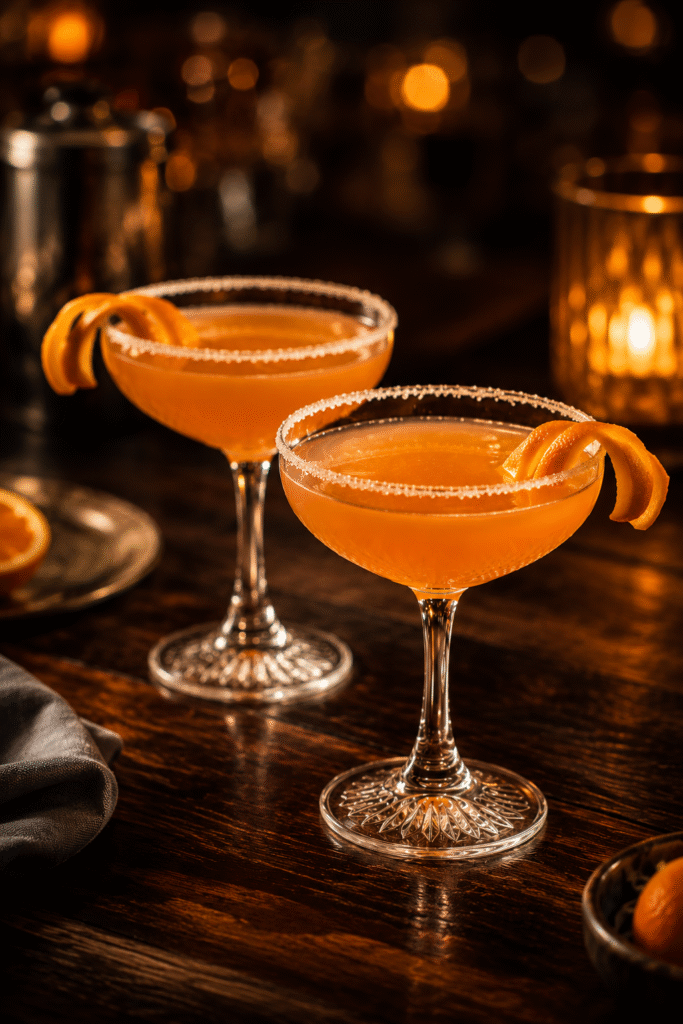
If you want to add a layer of rich complexity to your drink, consider swapping out the Cointreau. Making a sidecar with Grand Marnier introduces deeper flavors to the cocktail.
Unlike Cointreau, which is a neutral spirit-based triple sec, Grand Marnier is an orange liqueur blended with cognac. By using it in your sidecar recipe, you reinforce the brandy foundation of the drink. It brings notes of vanilla, toasted oak, and bitter orange peel, resulting in a heavier, more luxurious cocktail better suited for winter evenings.
Presentation Matters: Choosing the Ideal Sidecar Cocktail Glass and Garnish
A great cocktail is a visual experience as much as a tasting one. The traditional sidecar cocktail glass is a classic coupe. The broad bowl allows the drink to aerate, while the stem prevents your hand from warming the chilled liquid. A martini glass can work in a pinch, but the coupe remains the elegant standard.
For the garnish, an orange twist is customary. Use a vegetable peeler to strip a wide piece of orange zest. Hold the peel over the drink, skin-side down, and pinch it to express the fragrant citrus oils across the surface of the cocktail. Drop the peel into the glass or rest it gently on the edge.
A Bold Twist: How to Make a Rich Bourbon Sidecar
If you do not have cognac on hand, or if you simply prefer American whiskey, a Bourbon Sidecar is a fantastic alternative. Bourbon provides a sweeter, more caramelized flavor profile with distinct notes of vanilla and baking spices.
Follow this step-by-step method for a bourbon variation:
- Prep: Sugar the rim of your coupe glass.
- Combine: Add 2 ounces of straight bourbon whiskey, 1 ounce of Cointreau, and 3/4 ounce of lemon juice to a shaker.
- Shake: Add ice and shake vigorously for 12 seconds.
- Strain and Serve: Double strain into your prepared glass and garnish with an orange twist.
Golden Rules to Avoid a Soggy or Too-Sour Sidecar Cocktail
Even with the best sidecar recipe, minor errors in execution can ruin the drink. Follow these step-by-step tips to guarantee perfection.
- Sugar only the outside of the rim: When prepping your glass, make sure the sugar stays on the exterior. If sugar falls inside the glass, it will dissolve into the cocktail and upset the delicate flavor balance you worked hard to achieve.
- Adjust the citrus based on the fruit: Lemons vary wildly in their acidity and sweetness depending on the season. Always taste your lemon juice before mixing. If it is overwhelmingly tart, you may need to reduce the measurement by a quarter of an ounce.
- Do not over-shake: Shaking for longer than 15 seconds will over-dilute the drink, resulting in a watery, lifeless cocktail. Stop shaking as soon as the shaker tin becomes uncomfortably cold to hold.
Frequently Asked Questions About the Best Sidecar Recipe
What makes a good sidecar recipe?
A great sidecar recipe relies on high-quality ingredients and a precise ratio. Using a decent VSOP cognac, authentic Cointreau, and freshly squeezed lemon juice ensures the cocktail has a bright, balanced, and complex flavor.
Can I make a sidecar without sugaring the rim?
Yes. The sugared rim is traditional and helps counteract the tartness of the lemon, but it is entirely optional. If you prefer a drier, sharper drink, you can skip the sugar rim or only coat half of the glass to give your guests a choice.
What is the difference between a Sidecar and a Margarita?
Both drinks belong to the daisy family and share a very similar structure. The main difference lies in the base spirit and the citrus. A Sidecar uses cognac and lemon juice, whereas a Margarita uses tequila and lime juice.
Can I batch this sidecar recipe for a party?
Absolutely. To batch the cocktail, multiply the ounce or milliliter measurements by the number of servings you need. Mix the liquor and juice in a pitcher and keep it in the refrigerator. When you are ready to serve, pour individual portions into a shaker with ice, shake to chill and dilute, and pour into prepared glasses.
Next Steps for Cocktail Enthusiasts
Mastering the classic sidecar recipe opens the door to understanding a vast array of traditional cocktails. Once you are comfortable balancing spirits with citrus and sweet liqueurs, you can confidently explore drinks like the White Lady, the Margarita, and the Daiquiri. Gather your ingredients, chill your coupe glasses, and start shaking up a piece of cocktail history tonight.


