
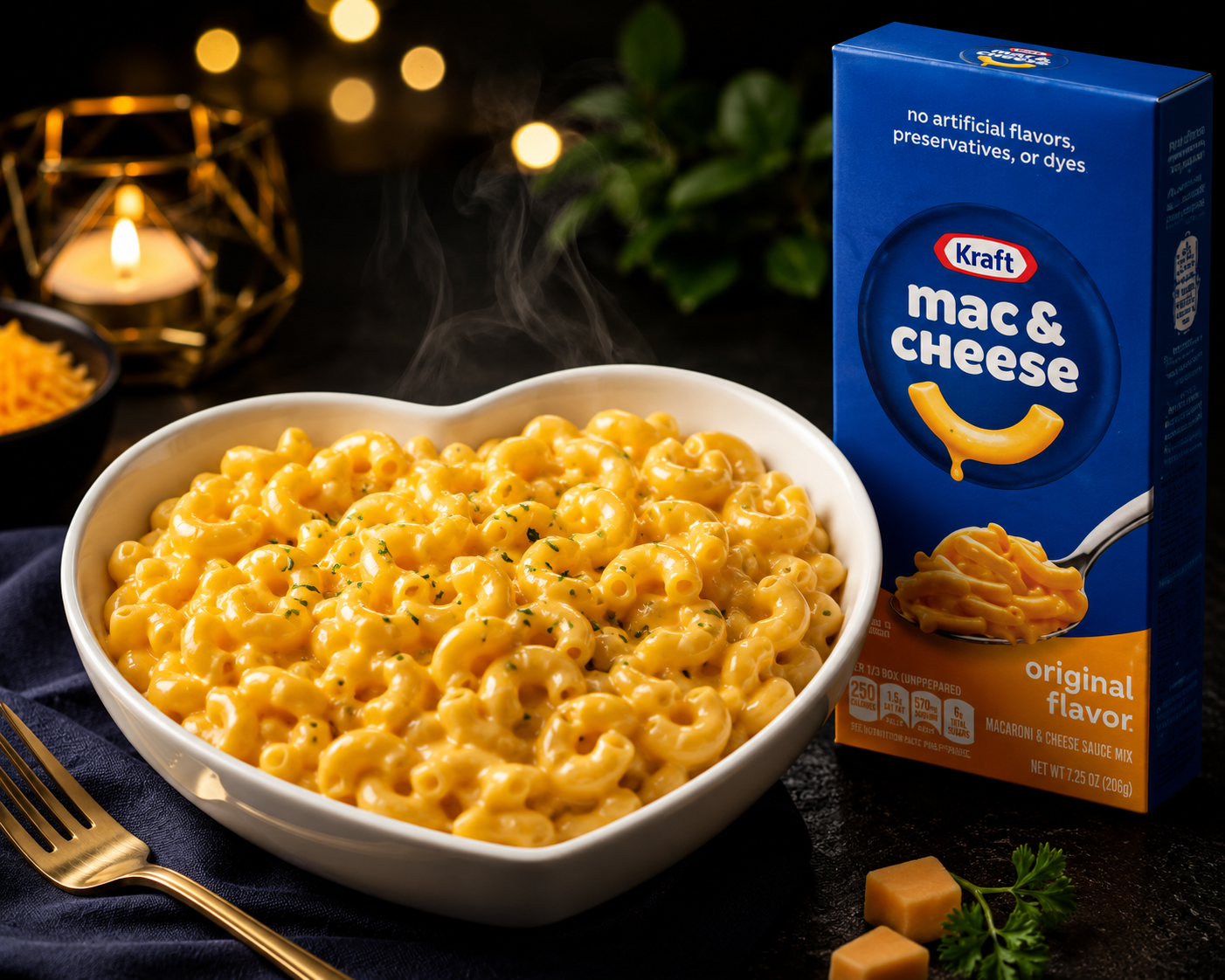
Kraft Mac and Cheese Nutrition has been a topic of curiosity for many who enjoy this classic comfort food. Known for its creamy texture and cheesy flavor, it’s a quick and easy meal that has been a household staple for decades. But have you ever wondered what’s really inside each box? From the calorie count to the ingredient list, understanding the nutritional value of Kraft Mac and Cheese can help you make more informed choices about what you’re eating. Whether you’re savoring it as a guilty pleasure or a convenient weeknight dinner, it’s worth exploring the facts behind this beloved dish.
Skinny Kraft Mac and Cheese (Without Butter & Milk)
Ingredients
Method
- Bring 6 cups of water to a rolling boil in a medium saucepan.
- Add the macaroni and cook for 7 to 8 minutes, stirring occasionally.
- Before draining the pasta, carefully scoop out 1/4 cup of the starchy pasta water and set it aside.
- Drain the macaroni well and return it to the saucepan.
- Add the cheese sauce packet and the reserved hot pasta water.
- Stir vigorously until the cheese powder dissolves into a smooth, velvety sauce.
The Ultimate Breakdown: Kraft Macaroni and Cheese Nutrition Label and Ingredients
When you flip over the box, the nutrition label can look a bit overwhelming. The manufacturer provides two sets of data: one for the dry mix as packaged, and another for the prepared meal assuming you follow their classic instructions. Understanding kraft mac and cheese nutrition starts with recognizing this difference.
A standard prepared serving typically contains around 350 calories, with a significant portion coming from carbohydrates and fats. You will also find a moderate amount of protein and a high level of sodium. Recognizing these base numbers is the first step to making informed choices about your meal planning.
What Are You Actually Eating? A Closer Look at Kraft Mac and Cheese Ingredients
Understanding the ingredients in Kraft Mac and Cheese can help you make better-informed decisions about your diet. Here’s a breakdown of the key components:
- Pasta
The pasta in Kraft Mac and Cheese is generally made from enriched wheat flour, which provides essential nutrients like iron and B vitamins. However, it’s also highly processed, which means fewer natural fibers compared to whole-grain options. - Cheese Powder Mix
The cheese powder mix contains whey, milk proteins, and cheese culture, delivering the signature flavor. It’s enhanced with artificial flavors, coloring agents (such as Yellow 5 and Yellow 6), and preservatives, which contribute to its long shelf life. - Fats
Butter or margarine, added during preparation, provides creaminess and flavor, but it significantly increases the fat and calorie content of the meal. - Milk
Milk is added to prepare the sauce, contributing to the creamy texture and a dose of calcium. However, depending on the type of milk used (whole, reduced-fat, or plant-based), the calorie and nutrient profile may vary. - Sodium and Preservatives
The product contains a high level of sodium, both from the cheese mix and additional preservatives, which are intended to maintain flavor and extend shelf life.
By analyzing these ingredients, you can see that while Kraft Mac and Cheese is convenient and tasty, it’s important to consider its processed nature and nutritional profile when incorporating it into your diet regularly.
The Reddit Debate: How Many Calories in a Box of Kraft Mac and Cheese Reddit Users Realistically Calculate
If you browse online fitness communities, you will quickly stumble upon a fierce debate regarding portion sizes. Many Reddit users point out that eating just one-third of the box leaves them hungry. They want to know the true kraft mac and cheese nutrition facts for consuming the entire package.
When you prepare the entire box using the traditional method with butter and whole milk, you are looking at over 1,000 calories. Online macro trackers often share their frustration with this reality, swapping tips on how to fit the whole box into a high-calorie bulking day or discussing strategies to split the box more evenly.
Box vs. Reality: Kraft Mac and Cheese Serving Size Demystified
| Serving Per Box | Per Serving (Traditional Prep) | Entire Box (Traditional Prep) |
|---|---|---|
| Calories | 350 | 1,050 |
| Total Fat | 13g | 39g |
| Saturated Fat | 7g | 21g |
| Cholesterol | 30mg | 90mg |
| Sodium | 720mg | 2,160mg |
| Carbohydrates | 47g | 141g |
| Protein | 10g | 30g |
This table highlights the nutritional breakdown of Kraft Mac and Cheese for both the standard box serving size and the entire box when prepared with butter and whole milk. Understanding these numbers may help consumers make informed dietary choices or adjust portion sizes to fit their nutritional goals.
Portion Control: How Many Calories in 1/2 Cup Kraft Mac and Cheese?
For those looking to enjoy a small taste as a side dish, a 1/2 cup serving is a great option. A prepared 1/2 cup of the classic recipe contains roughly 175 calories. This smaller portion allows you to satisfy your craving while keeping your dietary goals fully on track.
By scaling down the serving size, the impact on your daily macronutrients becomes minimal. You can easily pair this small portion with a large salad or a serving of grilled chicken to create a balanced, fulfilling dinner.
Kraft Mac and Cheese Nutrition Calculator: How to Track Your Mac in Macros
To better track your intake, here is a simple breakdown of Kraft Mac and Cheese nutrition in commonly consumed portion sizes. These values are approximate and based on the standard preparation with butter and milk. Use this table as a quick reference to fit Kraft Mac and Cheese into your dietary plan.
| Serving Size | Calories | Protein (g) | Carbs (g) | Fat (g) |
|---|---|---|---|---|
| 1/2 cup (about 70g) | 175 | 5 | 26 | 6 |
| 1 cup (about 140g) | 350 | 10 | 52 | 12 |
| 1.5 cups (about 210g) | 525 | 15 | 78 | 18 |
| 2 cups (about 280g) | 700 | 20 | 104 | 24 |
By using this table, you can align each serving size with your daily macronutrient targets. For more precision, consider using a kitchen scale for accurate portion measurements.
Cutting the Fat: Calories in Box of Kraft Mac and Cheese Without Butter and Milk
You can significantly alter the kraft mac and cheese nutrition profile by changing how you prepare it. Skipping the butter and milk is a popular trick for those looking to reduce fat and calories.
Recipe: Skinny Mac and Cheese
Ingredients:
- 1 box Kraft Macaroni and Cheese
- 6 cups water (for boiling)
- 1/4 cup reserved pasta water (instead of milk/butter)
Instructions:
- Bring 6 cups of water to a rolling boil in a medium saucepan.
- Add the macaroni and cook for 7 to 8 minutes, stirring occasionally.
- Before draining the pasta, carefully scoop out 1/4 cup of the starchy pasta water and set it aside.
- Drain the macaroni well and return it to the saucepan.
- Add the cheese sauce packet and the reserved hot pasta water.
- Stir vigorously until the cheese powder dissolves into a smooth sauce.
Preparing the whole box this way drops the total calorie count to roughly 750 calories for the entire package, eliminating mostly saturated fats.
Golden Rules for the Perfect Bowl: Official Kraft Mac and Cheese Instructions and Upgrades
Sometimes, you just want to experience the classic taste exactly as intended. Knowing the official recipe helps you understand the baseline for kraft mac and cheese nutrition before making any adjustments.
Recipe: The Classic Preparation
Ingredients:
- 1 box Kraft Macaroni and Cheese
- 6 cups water
- 4 tablespoons margarine or butter
- 1/4 cup milk (whole or 2% recommended)
Instructions:
- Boil 6 cups of water in a pot.
- Stir in the macaroni and cook for 7 to 8 minutes until tender.
- Drain the water completely. Do not rinse the pasta.
- Return the macaroni to the warm pan.
- Add the margarine or butter, milk, and cheese sauce mix.
- Mix well until the butter melts completely and the sauce coats every noodle evenly.
Is Kraft Mac and Cheese Healthy? Balancing Comfort Food with Daily Nutrition
The term “healthy” is highly subjective and depends entirely on your overall diet. Kraft mac and cheese nutrition reveals a product that is high in simple carbohydrates and sodium, but it also provides calcium and iron.
Eating this dish every single day might lead to an excess of sodium and saturated fat. However, enjoying it occasionally as part of a varied, nutrient-dense diet is perfectly fine. It all comes down to portion control and what you choose to eat alongside it.
Smart Swaps: How to Level Up Your Kraft Mac and Cheese Nutrition Without Losing the Taste
You can easily boost the nutritional value of your meal with a few simple additions. This upgraded version improves the kraft mac and cheese nutrition profile by adding fiber and lean protein.
Recipe: Protein-Packed Veggie Mac
Ingredients:
- 1 box Kraft Macaroni and Cheese
- 6 cups water
- 1/4 cup plain Greek yogurt (replaces butter and milk)
- 1 cup frozen broccoli florets
- 1 cup cooked, diced chicken breast
Instructions:
- Bring the water to a boil and add the macaroni.
- When the pasta has 3 minutes left to cook, add the frozen broccoli directly to the boiling water.
- Drain the pasta and broccoli together.
- Return the mixture to the pot and add the diced chicken breast.
- Stir in the cheese packet and the plain Greek yogurt.
- Mix thoroughly until a thick, creamy sauce forms.
The Greek yogurt provides a rich texture while adding extra protein, and the broccoli introduces essential fiber and vitamins.
The Future of Your Mac and Cheese
Understanding kraft mac and cheese nutrition gives you the power to enjoy your food exactly the way you want to. You no longer have to guess how many calories are in your bowl or wonder what ingredients make up that famous cheese powder.
Take these insights into your kitchen. Try swapping out the butter for Greek yogurt, or measure out a precise half-cup serving to go with your weeknight dinner. By making mindful adjustments, you can keep this beloved comfort food in your regular rotation for years to come.
FAQs
1. Is Kraft Mac and Cheese healthy?
Kraft Mac and Cheese can be part of a balanced diet when consumed in moderation. By making small adjustments, like reducing portion sizes or swapping butter for healthier alternatives, you can enjoy it while keeping nutrition in mind.
2. Can I make Kraft Mac and Cheese without dairy?
Yes! For a dairy-free version, you can replace milk with plant-based alternatives such as almond or oat milk and use a dairy-free butter substitute.
3. How can I lower the calorie count?
To lower the calorie count, consider using skim milk, reducing the amount of butter, or incorporating lower-calorie ingredients like Greek yogurt to add creaminess.
4. Are there gluten-free options available?
Kraft does offer gluten-free versions of their mac and cheese, providing a great alternative for those with gluten sensitivities or celiac disease.
5. Can I add vegetables to Kraft Mac and Cheese?
Absolutely! Adding veggies like broccoli, peas, or spinach not only boosts the nutritional content but also adds texture and flavor to the dish.


