
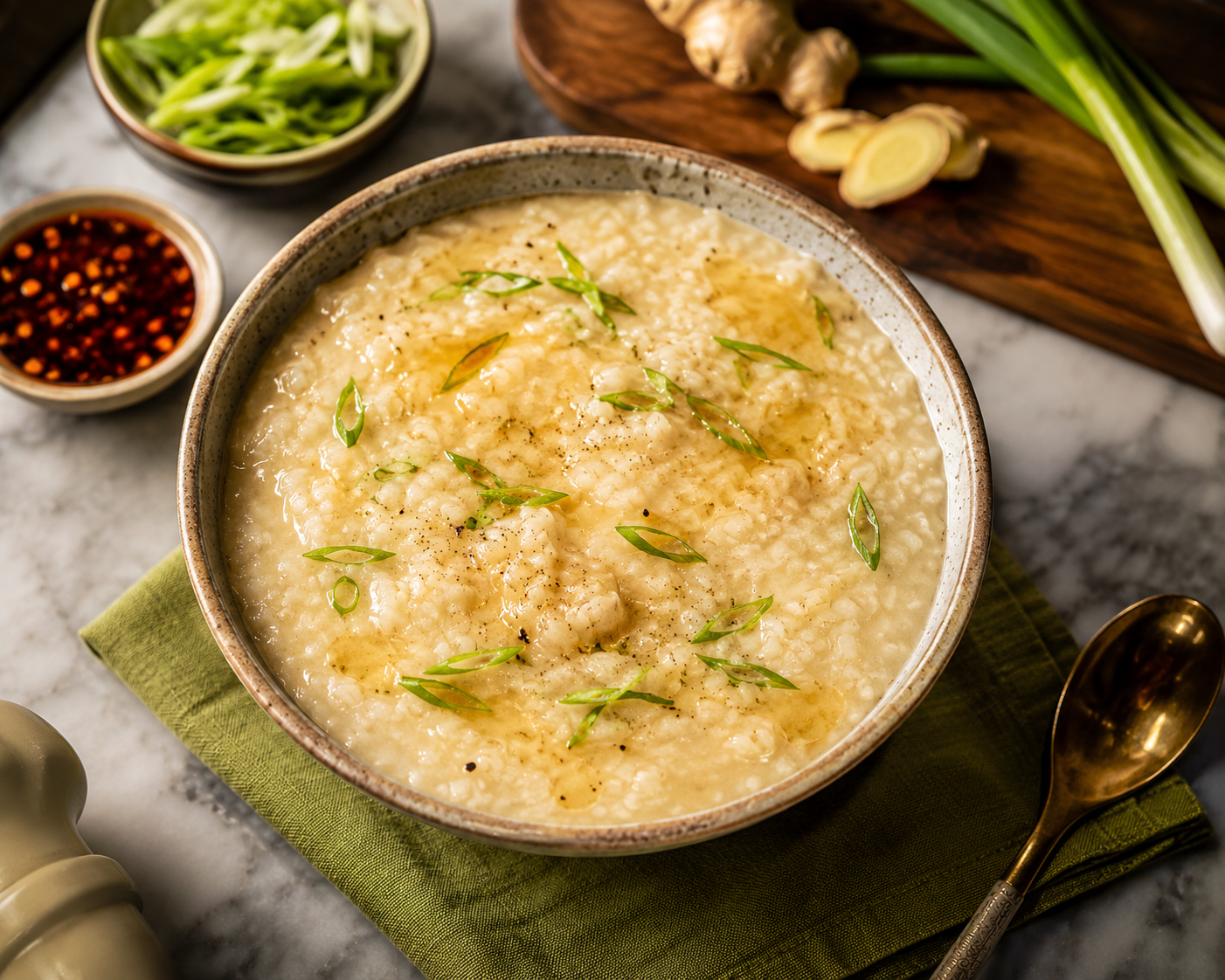
Congee is a savory Asian rice porridge made by slow-cooking rice in a large volume of water or broth until the grains break down into a creamy, comforting dish. It serves as a highly digestible healing meal, a versatile base for flavorful toppings, and a beloved comfort food recognized globally.
There is a profound sense of comfort found in a steaming bowl of perfectly cooked rice porridge. Across different cultures and generations, this simple dish provides warmth on cold mornings, healing on sick days, and a satisfying canvas for a multitude of savory flavors.
Mastering the art of congee means understanding how a handful of humble ingredients can transform into a rich, velvety masterpiece. While the cooking process requires patience, the actual technique is surprisingly simple once you know the core principles.
This guide will teach you everything you need to know about this iconic dish. You will learn the exact pronunciation, uncover its deep historical roots, and discover the step-by-step recipe to create a flawless base at home.
Master Creamy Congee
Ingredients
Method
- Rinse the Rice: Wash 1 cup of white rice thoroughly under cold water until the water runs completely clear, then drain it well.
- Combine Ingredients: In a large, heavy-bottomed pot, combine the rinsed rice with 8 to 10 cups of your chosen liquid (broth or water) and add the smashed ginger.
- Boil and Simmer: Place the pot over high heat and bring it to a rolling boil. Stir well to prevent sticking, then reduce the heat to the lowest setting.
- Slow Cook: Cover the pot with the lid slightly ajar to let steam escape. Let it simmer gently for 60 to 90 minutes.
- Stir for Creaminess: Stir the pot thoroughly every 15 minutes to help release the rice starches, giving the congee its signature smooth, velvety texture.
- Garnish and Serve: Ladle the warm congee into bowls and finish with your favorite savory toppings like soy sauce, sesame oil, or green onions.
How do you pronounce congee correctly?
Before diving into recipes and techniques, you need to know how to order and discuss the dish with confidence. The word congee is pronounced as “KAHN-jee.” The emphasis lands heavily on the first syllable, while the second syllable rhymes with “bee.”
While regional variations in Asia have their own specific names for rice porridge—such as jook in Cantonese or okayu in Japanese—the English term originates from the Tamil word kanji. Saying “KAHN-jee” naturally will help you navigate Asian markets and restaurants like a seasoned food enthusiast.
What is the fascinating historical origin of congee?
The roots of congee stretch back thousands of years. Historical texts from the Chinese Zhou dynasty, which dates back to roughly 1000 BC, mention the consumption of slow-cooked rice porridge. Historically, it served as a practical way to stretch a small amount of rice to feed a large family during times of scarcity.
Over the centuries, this humble meal evolved from an economic necessity into a deeply ingrained cultural staple across Asia. Today, it holds a place of honor at breakfast tables, acts as an essential offering during traditional ceremonies, and represents the ultimate expression of culinary care.
Why is congee different from traditional oatmeal porridge?
When you hear the word porridge, you might immediately think of sweet oats, brown sugar, and fruit. However, traditional oatmeal and Asian rice porridge are completely different culinary experiences.
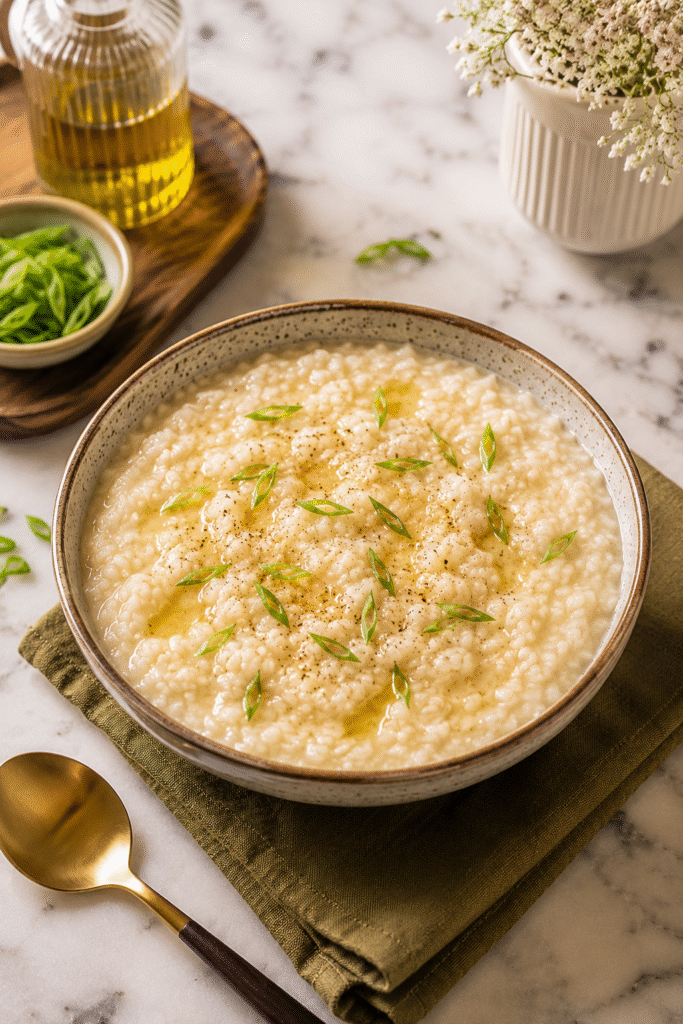
First, the texture of congee is uniquely silky. Because white rice releases starches as it slow-cooks in a large volume of liquid, the resulting broth becomes incredibly creamy and cohesive. Second, it is fundamentally a savory dish. Instead of maple syrup or cinnamon, it relies on umami-rich broths, soy sauce, ginger, and savory meats to build its flavor profile.
Why is congee considered the ultimate healing bowl for sick days?
Ask almost anyone from an Asian household what they eat when they have a cold, and the answer will be congee. Because the rice is cooked down until it practically dissolves, it requires very little energy for the body to digest.
The high water content also provides essential hydration, while a bone broth base delivers easily absorbable nutrients and minerals. The warmth of the bowl soothes a sore throat, and the mild flavor profile settles an upset stomach without causing further irritation.
How to Create a Delicious Indian Twist on Congee
Adding an Indian twist to congee is a great way to combine comforting flavors with fragrant spices. Here’s a step-by-step guide to crafting a flavorful Indian-style congee:
Ingredients:
- 1 cup jasmine or basmati rice
- 6 cups water or vegetable/chicken broth
- 1 tablespoon ghee (or vegetable oil for a vegan option)
- 1 teaspoon cumin seeds
- 1 teaspoon mustard seeds
- 1 small onion, finely chopped
- 2 garlic cloves, minced
- 1-inch piece of ginger, grated
- 1 green chili (optional), finely chopped
- 1 carrot, diced
- 1/2 cup green peas
- 1/2 teaspoon turmeric powder
- 1/2 teaspoon garam masala
- Salt to taste
- Chopped cilantro for garnish
- Lemon or lime wedges for serving
Instructions:
- Prepare the Rice Base
Rinse the rice thoroughly under cold water until the water runs clear. Combine the rice and 6 cups of water or broth in a large pot. Bring to a boil, then reduce the heat to low and simmer. Stir occasionally until the rice breaks down into a porridge-like consistency (this process may take 40-50 minutes). - Prepare the Tempered Spices
While the rice is cooking, heat the ghee in a pan over medium heat. Add the cumin seeds and mustard seeds, allowing them to crackle for a few seconds. Add the onions, ginger, garlic, and green chili, and cook until aromatic and the onions are golden brown. - Add Vegetables and Spices
Toss in the diced carrots, peas, turmeric, and garam masala. Stir the mixture and cook the vegetables until tender, about 5-7 minutes. - Combine the Flavors
Once the rice has transformed into a soft, creamy porridge, add the spiced vegetable mixture to the pot. Stir well to combine, and adjust the salt to taste. If the congee is too thick, add more water or broth to achieve your desired consistency. - Serve and Garnish
Ladle the Indian-style congee into bowls, garnish with fresh cilantro, and serve with a wedge of lemon or lime on the side for added zest. Pair it with crispy papad or pickles for an Indian-inspired comforting meal.
This recipe is perfect for when you need something nourishing yet flavorful, blending the traditional essence of congee with bold, vibrant Indian tastes.
What is the step-by-step master recipe for a creamy congee base?
Creating the perfect creamy texture requires the right ratio of liquid to rice. Follow these step-by-step instructions for a flawless base:
- Rinse the rice: Measure 1 cup of long-grain white rice (jasmine rice works beautifully). Rinse it under cold water until the water runs clear, then drain it thoroughly.
- Freeze the rice (optional trick): Place the rinsed, damp rice in the freezer for a few hours. Freezing breaks down the cell walls of the rice, significantly reducing the cooking time and enhancing the creamy texture.
- Combine ingredients: In a large, heavy-bottomed pot, combine the rice with 8 to 10 cups of liquid. You can use chicken broth, vegetable stock, or just filtered water. Add a 1-inch piece of peeled, smashed ginger for subtle flavor.
- Bring to a boil: Place the pot over high heat and bring the liquid to a rolling boil. Stir well to prevent any grains from sticking to the bottom.
- Simmer slowly: Reduce the heat to the lowest setting. Cover the pot with the lid slightly ajar to allow steam to escape. Let it simmer gently for 60 to 90 minutes.
- Stir frequently: Stir the pot every 15 minutes. The vigorous stirring helps release the rice starches, which thickens the broth and gives the congee its signature velvety finish.
What are the restaurant secrets for elevating congee toppings?
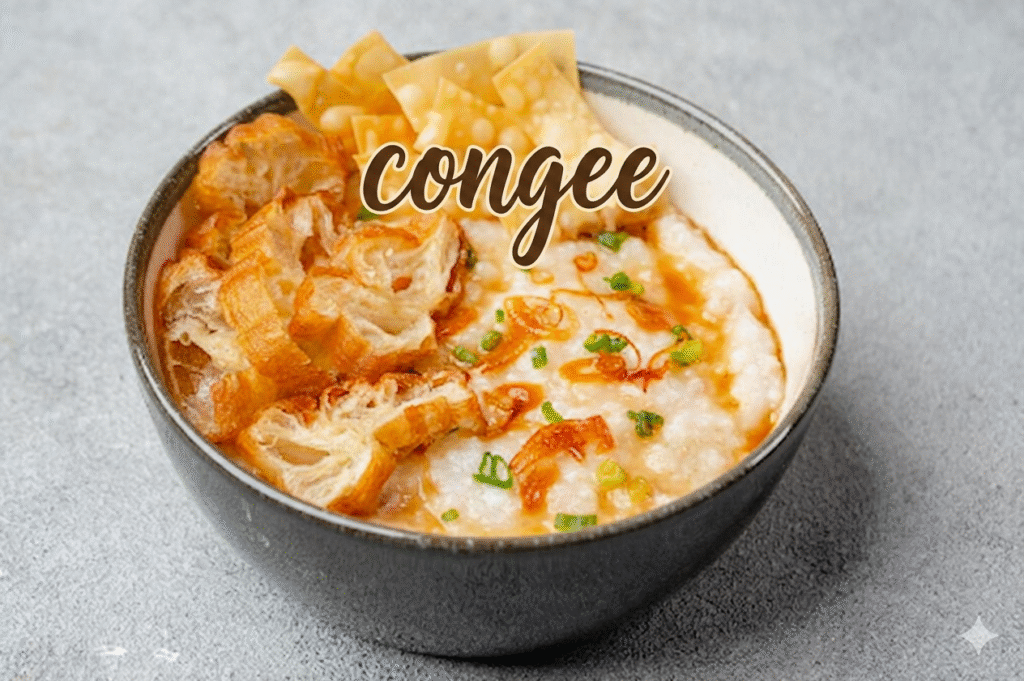
Professional chefs know that a great bowl of congee is all about textural contrast. The base is soft and uniform, so the toppings must provide crunch, acidity, and concentrated umami.
Restaurants often use premium ingredients to elevate the dish. They fold in thinly sliced abalone, fresh scallops, or velveted chicken just before serving so the residual heat cooks the proteins gently. They also prioritize high-quality condiments, finishing the bowl with aged soy sauce, premium sesame oil, and freshly fried dough sticks (youtiao) that offer a satisfying crunch.
How can you find authentic congee near your location?
If you want to experience professional congee without cooking it yourself, you need to know where to look. Standard takeout menus often overlook this comfort food, but traditional dim sum parlors and dedicated Asian bakeries almost always serve it.
Search your local maps for “dim sum restaurants” or “Cantonese BBQ spots” in your area. Alternatively, visit local Asian supermarkets that feature a hot food deli. These hidden gems often serve massive, incredibly authentic bowls of rice porridge very early in the morning.
What are the best advanced congee toppings to try at home?
Once you master the base recipe, the real fun begins. Move beyond the classic garnishes of green onions and white pepper by trying these advanced toppings:
- Crispy Garlic and Shallots: Fry thinly sliced garlic and shallots in neutral oil until golden brown. Sprinkle them generously over your bowl for intense flavor and crunch.
- Chili Crisp Oil: A spoonful of spicy, savory chili oil adds a vibrant red color and a complex, fiery kick.
- Jammy Eggs: A soft-boiled egg with a slightly runny yolk adds rich decadence. Marinate the egg in soy sauce and mirin overnight for an extra layer of flavor.
- Preserved Radish: Sweet and salty preserved vegetables provide an intense flavor punch that cuts right through the rich rice base.
How do you meal prep and batch cook congee for busy weeks?
Congee is an incredibly practical food for busy schedules. You can easily make a large batch on a Sunday and enjoy it throughout the week.
Cook a plain base using just water or mild broth, then let it cool completely. Store it in an airtight container in the refrigerator for up to five days. When you want to eat it, scoop a portion into a saucepan. The rice will have absorbed a lot of the moisture in the fridge, so add a splash of water or broth while reheating it over medium heat. Stir well until it regains its silky texture, then add your fresh toppings.
Start your comfort food journey today
Making congee at home is a rewarding culinary skill that pays off on cold mornings, stressful evenings, and everything in between. By understanding the proper cooking techniques and experimenting with bold toppings, you can turn a cup of raw rice into a luxurious, satisfying meal. Gather your ingredients, start simmering your broth, and experience the ultimate comfort food for yourself.
Frequently asked questions about congee
Is congee healthy to eat every day?
Yes, it is very healthy to eat daily. It is easy on the digestive system and highly hydrating. To make it a complete meal, ensure you add adequate protein (like chicken or eggs) and healthy fats (like sesame oil).
Can I use brown rice instead of white rice?
You can use brown rice, but it will not achieve the same silky, creamy texture as white rice due to the intact bran layer. If you use brown rice, you will need to increase the cooking time and add more liquid.
How long does it take to cook congee in a slow cooker?
Cooking it in a slow cooker takes about 8 hours on the low setting or 4 hours on the high setting. This hands-off method is excellent for overnight cooking so you can wake up to a warm breakfast.
Can you freeze leftover cooked congee?
Yes, you can freeze it in airtight containers for up to three months. When you are ready to eat it, thaw it overnight in the refrigerator and reheat it on the stove with a little extra water or broth to restore the creamy consistency.


