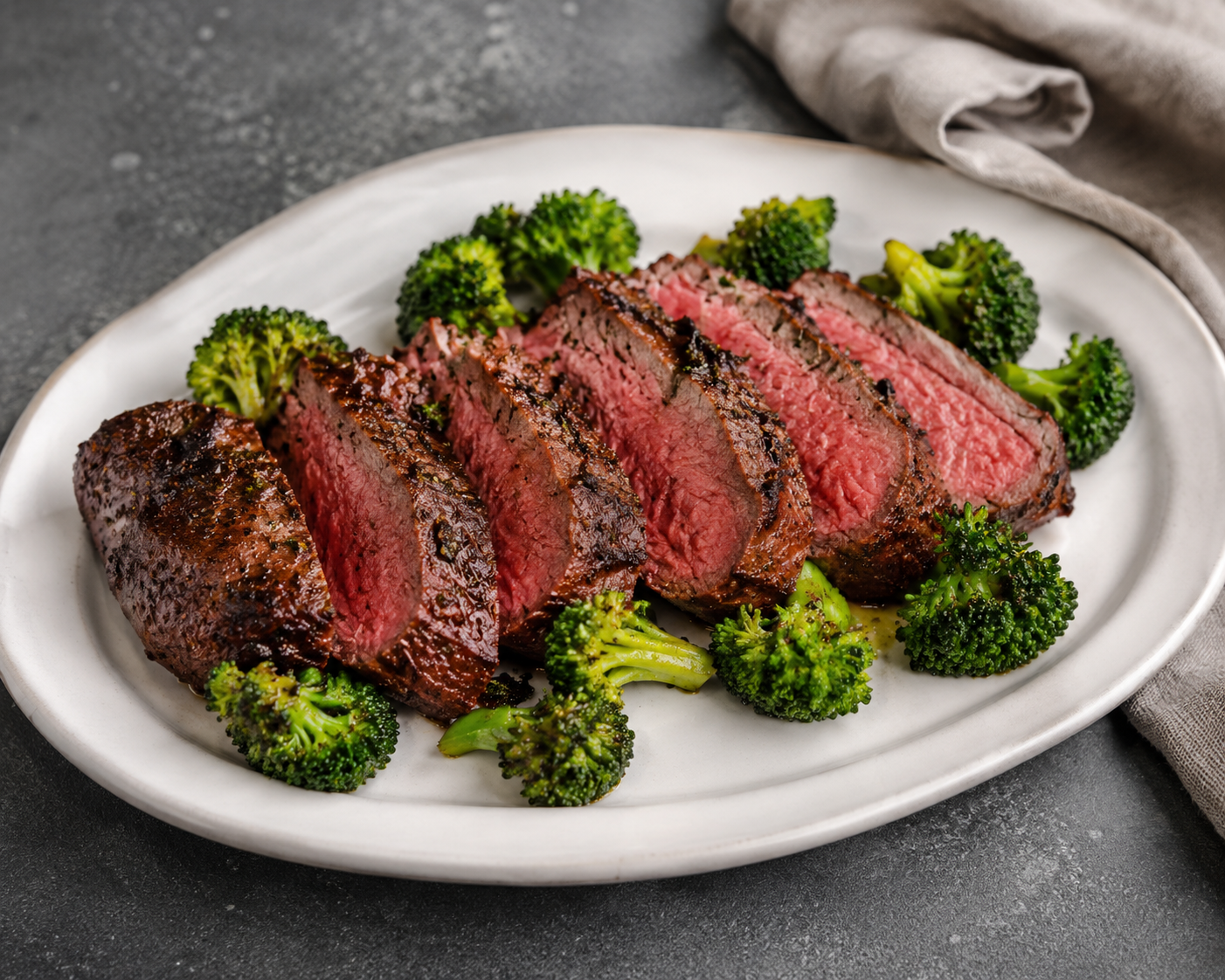
Chateaubriand is a premium cut of beef taken from the center-cut of the tenderloin. Known for its exceptional tenderness and mild flavor, this thick roast is traditionally served for two people alongside a rich sauce. Culinary experts widely consider it the most luxurious and expensive steak available.
Sitting down to a perfectly cooked beef dinner is a memorable experience. However, preparing a premium cut at home can feel intimidating. Many home cooks avoid high-end beef because they fear ruining an expensive piece of meat.
This guide removes the mystery surrounding the world’s finest beef roast. You will learn the history of the cut, how to pronounce its name, and exactly how to cook it perfectly in your own kitchen. By following these step-by-step instructions, you can recreate a steakhouse experience at home.
Classic Chateaubriand Masterclass with Bearnaise Sauce
Ingredients
Method
- Step 1: Prep and Season the Meat
- Remove the beef tenderloin from the refrigerator 1 hour before cooking to bring it to room temperature.
- Pat the meat completely dry with paper towels.
- Season the roast generously on all sides with kosher salt and freshly cracked black pepper.
- Step 2: Slow Roast (Reverse-Sear)
- Preheat your oven to 225°F (107°C).
- Place the seasoned beef on a wire rack set inside a baking sheet.
- Roast for 45 to 60 minutes until a digital meat thermometer reads 115°F (46°C) for medium-rare. Remove from the oven.
- Step 3: Make the Bearnaise Sauce Reduction
- While the meat roasts, combine white wine vinegar, dry white wine, minced shallot, and a tarragon sprig in a small saucepan.
- Simmer over medium heat until the liquid reduces to exactly 2 tablespoons. Strain and discard the solids.
- Step 4: Emulsify the Sauce
- Whisk 3 egg yolks into the cooled vinegar reduction in a heatproof bowl.
- Set the bowl over a pot of barely simmering water (double boiler), whisking continuously until the yolks thicken slightly.
- Slowly drizzle in 1/2 cup of melted warm butter while whisking vigorously until a creamy, yellow emulsion forms. Stir in chopped tarragon and a pinch of salt. Set aside in a warm place.
- Step 5: Chef Ramsay Style Pan-Basting & Searing
- Heat a heavy cast-iron skillet over high heat with 1 tablespoon of neutral oil until smoking hot.
- Add the roast and sear for exactly 1 minute per side to form a beautiful brown crust.
- Drop 3 tablespoons of butter, crushed garlic cloves, and fresh thyme into the pan. As the butter foams, use a spoon to continuously scoop and baste the hot butter over the beef.
- Step 6: Rest and Serve
- Transfer the Chateaubriand roast to a cutting board and let it rest for 15 minutes to allow the juices to redistribute.
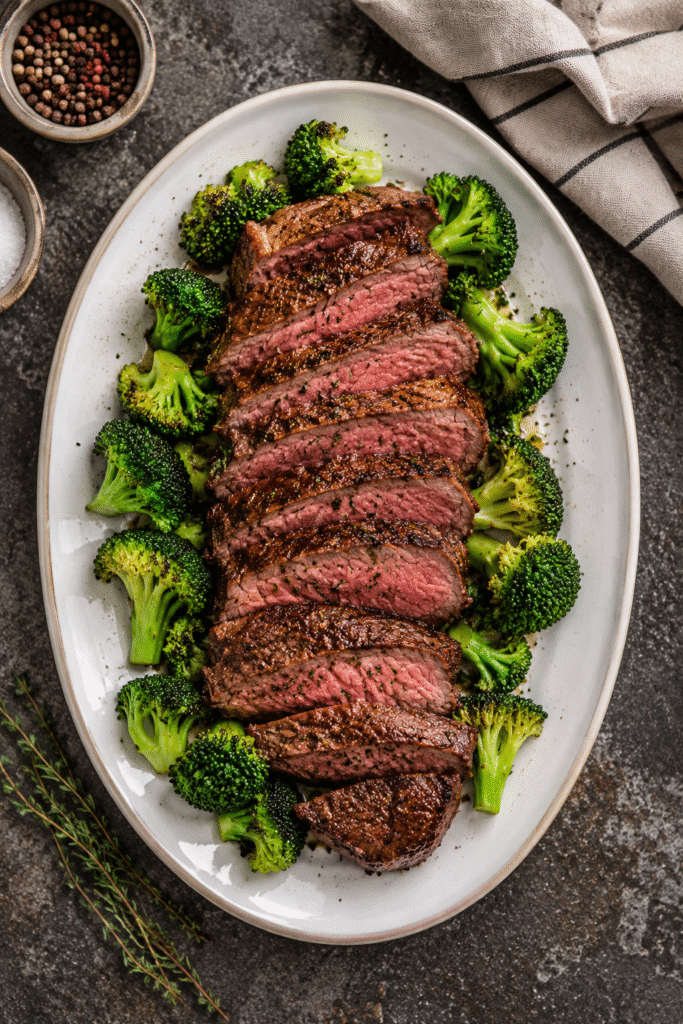
- Slice the roast into thick, luxurious medallions and serve immediately with the warm Bearnaise sauce.
What is the Chateaubriand dish and why is it the king of steaks?
The Chateaubriand dish features a thick, premium cut of beef sourced directly from the center portion of the tenderloin. Because the tenderloin is a muscle that bears no weight and gets very little exercise, the meat yields a buttery, melt-in-your-mouth texture. A single cow only provides a very small center-cut tenderloin, making this roast rare and highly sought after by chefs worldwide.
What is the correct Chateaubriand pronunciation?
If you want to order this dish at a fine dining restaurant, you need to know how to say it. The correct Chateaubriand pronunciation is “sha-tow-bree-AHN.” The emphasis falls on the final syllable, and the “n” has a soft, nasal quality typical of the French language.
What is the Chateaubriand translation and history?
The Chateaubriand translation does not refer to a specific cooking technique or cow breed. Instead, the dish is named after François-René de Chateaubriand, a French author and diplomat. According to culinary historians, his personal chef Montmireil created the dish in 1822. The chef originally cooked the tenderloin by wrapping it in lesser cuts of meat and discarding the charred outer layers to ensure the inside cooked gently and evenly.
What is the average Chateaubriand price and is it worth it?
You can expect a high Chateaubriand price tag. At a high-end steakhouse, a dinner for two featuring this cut frequently costs between $130 and $250. If you purchase the raw meat from a local butcher, prices generally range from $30 to $50 per pound.
Choose this cut if you value extreme tenderness over robust beef flavor. Because it is so lean, it lacks the aggressive, beefy taste of a ribeye. However, the unmatched texture makes the investment well worth it for special occasions.
What is the best Chateaubriand recipe for a flawless roast?
Cooking this delicate meat requires careful attention to temperature. Here is a step-by-step Chateaubriand recipe using the reverse-sear method:
- Prepare the meat: Remove the beef from the refrigerator one hour before cooking. Season it generously on all sides with kosher salt and freshly cracked black pepper.
- Slow roast: Preheat your oven to 225°F (107°C). Place the beef on a wire rack set inside a baking sheet. Roast for 45 to 60 minutes.
- Check the temperature: Use a digital meat thermometer. Remove the beef when the internal temperature reaches 115°F (46°C) for medium-rare.
- Sear the outside: Heat a cast-iron skillet over high heat with one tablespoon of neutral oil. Sear the meat for exactly one minute per side until a brown crust forms.
- Rest and slice: Transfer the meat to a cutting board. Let it rest for 15 minutes before slicing it into thick medallions.
How to cook Chateaubriand Gordon Ramsay style?
Chef Gordon Ramsay uses a traditional pan-basting technique to elevate the flavor of the lean beef. If you want to know how to cook Chateaubriand Gordon Ramsay style, follow these steps:
- Season heavily: Coat the beef with salt, pepper, and a light dusting of smoked paprika.
- Pan-sear: Heat a heavy skillet with a splash of olive oil until smoking hot. Sear the beef on all sides to lock in the juices.
- Baste with butter: Drop three tablespoons of unsalted butter, two crushed garlic cloves, and a few sprigs of fresh thyme into the pan. As the butter melts and foams, use a spoon to continuously scoop the butter over the top of the beef.
- Oven finish: Transfer the skillet to a preheated 400°F (200°C) oven for 10 to 12 minutes.
- Rest: Remove from the oven and let the meat rest for 10 minutes to allow the juices to redistribute.
What is the best Chateaubriand sauce recipe?
Because the tenderloin is quite lean, it pairs perfectly with a rich, fat-based sauce. Bearnaise is the traditional choice. Here is a simple step-by-step Chateaubriand sauce recipe:
- Make a reduction: In a small saucepan, combine 1/4 cup of white wine vinegar, 1/4 cup of dry white wine, one minced shallot, and a sprig of fresh tarragon. Simmer until the liquid reduces to two tablespoons. Strain the liquid and discard the solids.
- Whisk the yolks: Place three egg yolks in a heatproof bowl. Whisk in the cooled vinegar reduction.
- Create a double boiler: Set the bowl over a pot of barely simmering water. Whisk continuously until the egg yolks thicken slightly.
- Emulsify the butter: Slowly drizzle in 1/2 cup of melted, warm unsalted butter while whisking vigorously. The sauce will thicken into a creamy, yellow emulsion.
- Finish: Stir in one tablespoon of freshly chopped tarragon and a pinch of salt. Serve immediately over the sliced beef.
What is the best Chateaubriand wine pairing?
The ideal Chateaubriand wine pairing balances the rich sauce and the tender meat without overpowering the dish’s delicate flavor. Choose a medium-to-full-bodied red wine with smooth tannins. A French Bordeaux, particularly from the Left Bank, provides excellent earthy notes. Alternatively, a high-quality California Cabernet Sauvignon or an aged Pinot Noir offers beautiful fruit flavors that complement the savory beef.
How can I find a restaurant serving Chateaubriand near me?
Finding this rare cut requires a bit of research. If you are searching for “Chateaubriand near me,” start by looking at traditional, high-end steakhouses or classic French bistros in your city. Review their menus online, as this dish is almost always listed under a “For Two” section. Call the restaurant ahead of time, as some establishments require a 24-hour notice to prepare this specific cut properly.
What are the best ways to use Chateaubriand leftovers?
If you have leftover meat, handle it delicately to avoid drying it out. The best way to enjoy Chateaubriand leftovers is to eat them cold or at room temperature.
- Steak Salad: Thinly slice the cold beef and serve it over fresh arugula with blue cheese crumbles and a light balsamic vinaigrette.
- Gourmet Sandwich: Layer cold slices on toasted ciabatta bread with caramelized onions and a spread of horseradish mayonnaise.
Elevate Your Culinary Skills
Mastering the Chateaubriand requires an understanding of basic meat temperatures and a willingness to try classic techniques. Whether you choose the slow reverse-sear method or a butter-basting technique, the result is a spectacular meal that commands attention.
Frequently Asked Questions
Is Chateaubriand just a filet mignon?
No. While both cuts come from the tenderloin, filet mignon is sliced from the smaller, tapered end of the muscle. Chateaubriand is cut from the thickest, center portion of the tenderloin and is served as a large roast rather than an individual steak.
How many people does one Chateaubriand serve?
A standard center-cut roast typically weighs between 16 and 24 ounces. This portion size perfectly serves two adults, which is why restaurants traditionally market it as a dinner for two.
Can I cook this cut on an outdoor grill?
Yes, you can cook it on a grill using a two-zone heating method. Sear the meat quickly over the hot coals, then move it to the cooler side of the grill. Close the lid and let it roast gently until it reaches your desired internal temperature.


