
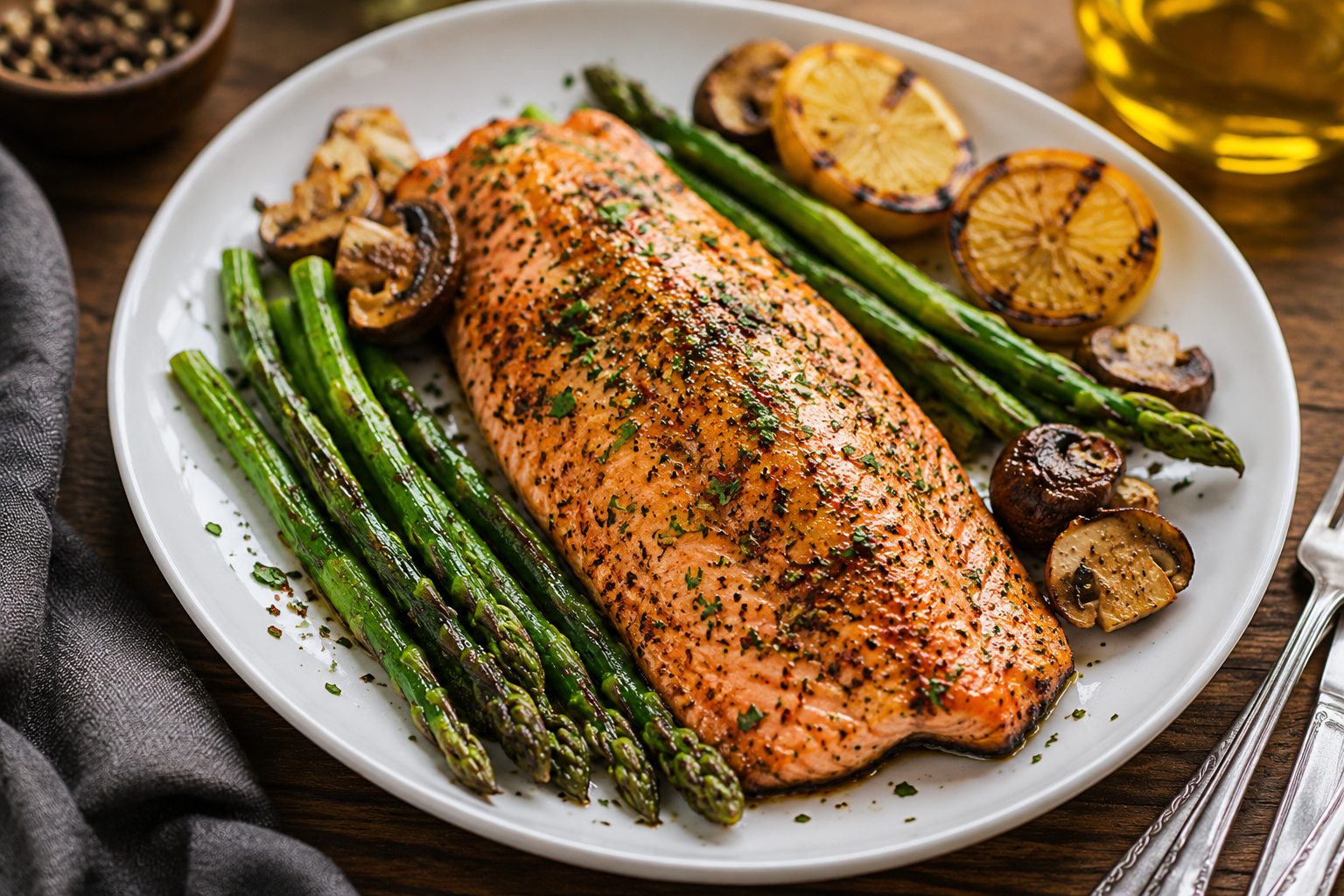
Salmon is one of the most flavorful and nutritious seafood choices, but grilling it perfectly can be challenging for many home cooks. A few extra minutes on the grill can turn a juicy fillet into a dry and overcooked meal. The good news is that with the right techniques, anyone can prepare tender, flaky, and restaurant-quality grilled salmon at home.
Whether you prefer cooking directly on the grill, using foil packets, or trying an oven-broiled version, understanding the proper methods makes all the difference. This guide covers everything you need to know to achieve perfectly grilled salmon every time.
The Ultimate Juicy Grilled Salmon Masterclass
Ingredients
Method
- Preheat & Prep: Preheat your grill to medium-high heat (400°F/204°C). Thoroughly clean the grates and oil them well to prevent the fish from sticking.
- Season the Fish: Pat the salmon fillets completely dry using a paper towel. Brush olive oil on both sides, then evenly apply the mixture of garlic powder, smoked paprika, salt, and black pepper.
- The First Sear: Place the salmon directly onto the hot grill, skin-side down. Close the grill lid and let it cook undisturbed for 5 to 6 minutes.
- The Flip: Once the skin becomes crispy and naturally releases from the grates, very gently flip the salmon over using a fish spatula.
- Finish Cooking: Cook the other side for just an additional 2 to 3 minutes until the salmon turns opaque on the inside.
- Rest & Serve: Remove the salmon from the grill, squeeze fresh lemon juice over the top, and let it rest for 3 minutes before serving.
The Golden Rules: How to Grill Salmon with Skin Without It Sticking
The biggest fear everyone faces is leaving half the fish stuck to the grill grates. Keeping the skin on is your best insurance policy. The skin acts as a natural barrier between the delicate flesh and the intense heat.
To ensure it doesn’t stick, follow these three golden steps:
- Dry the fish: Use a paper towel to pat the salmon completely dry. Moisture is the enemy of a good sear.
- Oil the grates, not just the fish: Clean your grill grates thoroughly, dip a rolled paper towel in high-smoke-point oil (like canola or avocado oil), and use tongs to rub it over the hot grates.
- Don’t rush the flip: The salmon will naturally release itself from the grates once a proper crust forms. If you try to flip it and feel resistance, leave it for another minute.
Timing is Everything: How Long to Grill Salmon with Skin to Avoid Overcooking
The line between juicy salmon and dry, chalky salmon is incredibly thin. As a general rule of thumb, salmon takes about 8 to 10 minutes per inch of thickness to cook through over medium-high heat (around 400°F / 204°C).
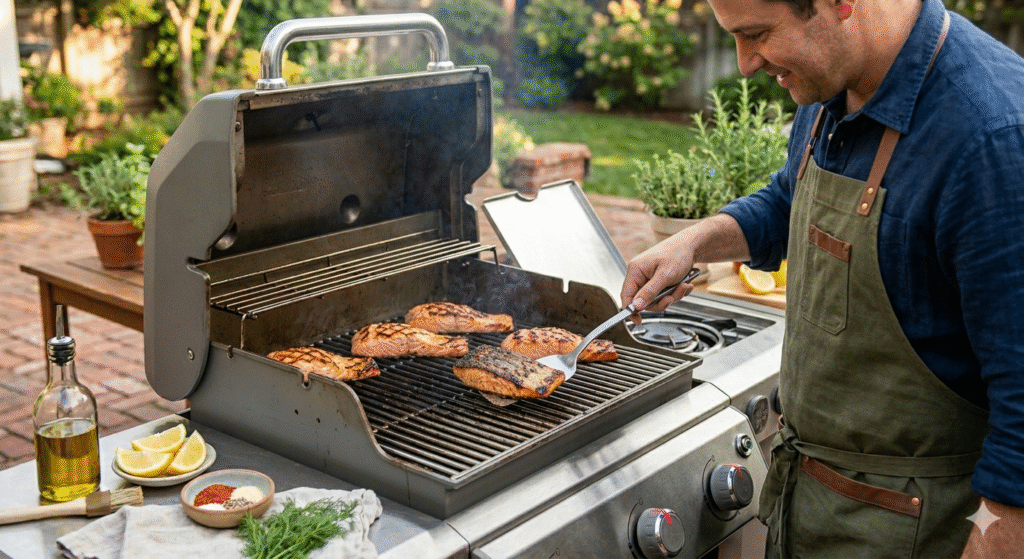
When grilling skin-on fillets, place them skin-side down first. Let them cook for about 5 to 6 minutes. This crisps up the skin and cooks the fillet most of the way through. Carefully flip the fillet using a wide spatula and cook the flesh side for an additional 2 to 3 minutes.
Fire Up the Grates: How to Grill Salmon on Gas Grill for That Smoky Flavor
A gas grill offers incredible temperature control, making it perfect for seafood.
Ingredients:
- 4 Salmon fillets (6 oz each, skin-on)
- 2 tbsp Olive oil
- 1 tsp Garlic powder
- 1 tsp Smoked paprika
- Salt and freshly cracked black pepper (to taste)
- 1 Lemon (cut into wedges)
Instructions:
- Preheat the Grill: Turn your gas grill to medium-high heat (aiming for 400°F/204°C) and oil the grates.
- Season: Brush the salmon fillets with olive oil and season generously with garlic powder, smoked paprika, salt, and pepper.
- The First Sear: Place the salmon skin-side down directly on the hot grates. Close the grill lid and let it cook undisturbed for 6 minutes.
- The Flip: Carefully slide a spatula under the skin and flip the salmon over. Cook for another 2 to 3 minutes until the internal temperature hits your target.
- Rest and Serve: Remove from the grill, squeeze fresh lemon juice over the top, and let it rest for 3 minutes before serving.
Foolproof Method: How to BBQ Salmon in Foil for Maximum Juiciness
If you want zero cleanup and guaranteed moisture, baking or BBQing your salmon inside a foil packet is the way to go. The foil locks in all the moisture, essentially steaming the fish in its own flavorful fat and aromatics.
Ingredients:
- 1 Large side of salmon (or 4 individual fillets)
- 3 tbsp Melted butter
- 3 cloves Garlic (minced)
- 1 tbsp Fresh dill (chopped)
- 1 Lemon (sliced into wheels)
- Salt and pepper to taste
Instructions:
- Prep the Foil: Cut a large piece of heavy-duty aluminum foil. Place it on a tray and lightly grease the center with oil or cooking spray.
- Assemble: Place the salmon in the center of the foil. Season with salt and pepper.
- Add Flavor: Pour the melted butter and minced garlic over the top. Layer the lemon slices and fresh dill over the fish.
- Seal the Packet: Fold the sides of the foil up and over the salmon, crimping the edges tightly to create a sealed packet, leaving a little pocket of air inside for steam.
- Grill: Place the foil packet directly onto a preheated medium-high grill. Close the lid and let it work its magic.
Master the Clock: How Long to Grill Salmon in Foil on High Heat
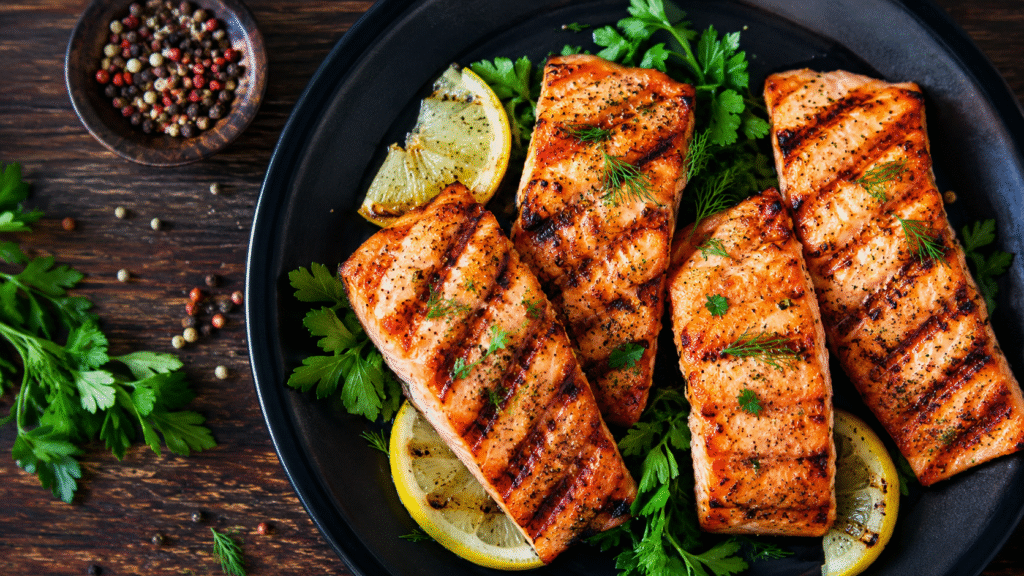
Because the foil protects the fish from direct flames, it can handle stable high heat without burning. On a grill preheated to 400°F, a whole side of salmon wrapped in foil will take roughly 14 to 18 minutes to cook through. Individual fillets wrapped together or separately will take about 10 to 12 minutes. You know it’s ready when the thickest part feels firm to the touch and the flesh looks opaque rather than translucent.
Indoor Alternative: How to Grill Salmon in Oven (Broiler Method)
When the weather isn’t cooperating, your oven’s broiler can mimic the intense, direct top-down heat of an outdoor grill perfectly.
Ingredients:
- 4 Salmon fillets
- 1 tbsp Olive oil
- 1 tbsp Honey
- 1 tsp Dijon mustard
- Salt and pepper
Instructions:
- Prep the Oven: Turn your oven to the Broil setting (High) and move the top oven rack about 5–6 inches below the heat source.
- Prepare the Pan: Line a baking sheet with foil and grease it lightly.
- Glaze: Mix the olive oil, honey, and Dijon mustard in a small bowl. Season the salmon with salt and pepper, then brush the honey-mustard glaze heavily over the top.
- Broil: Place the baking sheet under the broiler. Keep a close eye on it as the sugars in the honey can char quickly.
- Finish: Remove once the top is beautifully caramelized and the edges look slightly crisped.
Countdown to Perfection: How to Grill Salmon in Oven Without Drying It Out
Under a high broiler, individual salmon fillets cook incredibly fast. Typically, it takes only 5 to 8 minutes total. Because oven temperatures and broiler intensities vary wildly, it is crucial to check the fish at the 5-minute mark. If the top is browning too fast but the center is still raw, turn off the broiler and leave the pan in the warm oven for another 2 minutes to finish cooking gently.
Flavor Explosion: 10 Best Grilled Salmon Recipes You Must Try This Summer
If you want to spice up your routine, here are ten incredible flavor profiles to try on your next salmon fillet:
- Classic Lemon Herb Butter: Garlic, melted butter, fresh dill, and lemon.
- Sweet Chili Glaze: Thai sweet chili sauce mixed with a dash of soy sauce and lime.
- Brown Sugar Bourbon: A sticky, rich rub made of brown sugar, bourbon whiskey, and smoked sea salt.
- Teriyaki Ginger: Classic Japanese teriyaki marinade topped with toasted sesame seeds and green onions.
- Honey Mustard Glaze: Creamy Dijon mustard mixed with raw honey and a pinch of cayenne pepper.
- Cilantro Lime & Avocado Salsa: Simply grilled salmon topped with a fresh, bright avocado and tomato salsa.
- Smoky Chipotle Rub: Ground chipotle pepper, brown sugar, cumin, and garlic powder for a sweet-heat kick.
- Mediterranean Pesto: Slathering the top of the fish with rich basil pesto and finishing with crumbled feta cheese.
- Sriracha Honey: Equal parts Sriracha and honey with a splash of rice vinegar for a spicy punch.
- Cedar Plank Maple Mustard: Grilling salmon on a soaked cedar plank while brushing it with pure maple syrup and whole-grain mustard.
Essential Pro-Tips on How to Grill Salmon Like a Restaurant Chef
To take your dish from good to restaurant-grade, keep these chef secrets in mind:
- Bring to room temp: Take your salmon out of the fridge about 15 minutes before cooking. Cold fish hitting a hot grill causes the muscles to tighten up instantly, pushing out moisture and creating that white stuff (called albumin).
- Don’t over-marinate with acid: If your marinade contains a lot of lemon juice, lime juice, or vinegar, don’t leave the fish in it for more than 30 minutes. The acid will actually “cook” the delicate flesh (like ceviche) and make it mushy on the grill.
- Invest in a spatula: A long, flexible fish spatula is a game-changer for sliding under delicate skin without breaking the fillet apart.
Conclusion
Mastering how to grill salmon isn’t about luck—it’s about managing your heat, keeping your grill grates prepped, and watching the clock. Whether you prefer the raw, smoky char of cooking directly on a gas grill or the foolproof, buttery richness of a foil packet, salmon is an incredibly forgiving and rewarding fish when treated with respect. Grab your favorite seasonings, fire up the grill, and get ready to enjoy a perfectly flaky, restaurant-quality meal right at home!
FAQs about How to Grill Salmon?
Q1: Do you flip salmon when grilling?
Ans: If you are grilling directly on the grates, yes, but only once. Grill it skin-side down for about 60-70% of the time, then gently flip it to finish. If you are using the foil method, there is absolutely no need to flip the fish.
Q2: Should I wrap salmon in foil or grill it directly?
Ans: Both methods are great! Grill directly on the grates if you want crispy skin and distinct grill marks. Choose the foil method if you want a foolproof, mess-free experience where the salmon steams in its own juices and remains incredibly moist.
Q3: How do I know when my grilled salmon is fully cooked?
Ans: The easiest way is to press the thickest part of the fish gently with a fork. If it flakes easily, it’s done. If you have a digital meat thermometer, it should read 145°F (63°C), but you can pull it off at 135°F-140°F as it will continue to cook while resting.
Q4: Can I grill frozen salmon?
Ans: It is highly recommended to completely thaw the salmon in the refrigerator overnight before grilling. Grilling frozen salmon leads to uneven cooking—the outside will overcook while the inside remains frozen.

