

A classic Negroni is a sophisticated Italian cocktail made of equal parts gin, sweet vermouth, and Campari, garnished with an orange peel. It is renowned for its bold, bittersweet, and herbaceous flavor profile, making it a beloved aperitif for cocktail enthusiasts worldwide.
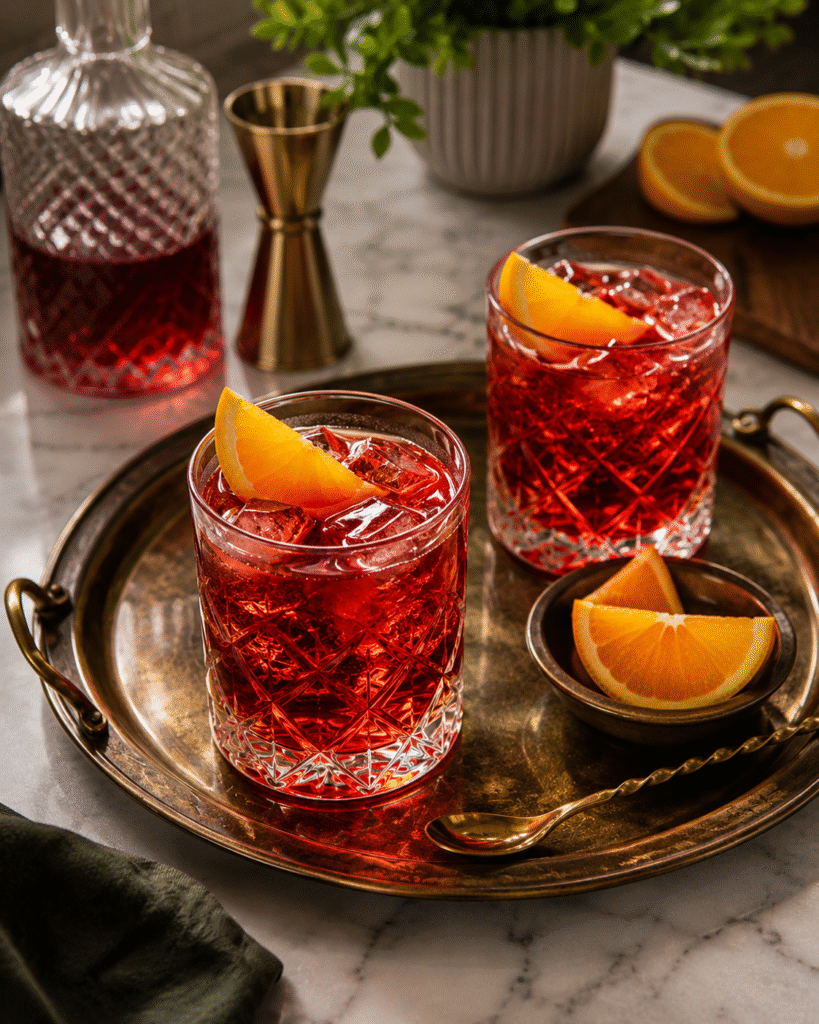
The bright crimson hue of a Negroni sitting in a lowball glass is an unmistakable sight in bars across the globe. This classic Italian drink strikes a flawless balance between bitter, sweet, and botanical flavors, demanding attention from the very first sip.
While its recipe is famously simple, mastering this cocktail requires an understanding of how each component interacts. Small adjustments to your spirits, ice, or garnish can drastically alter the final result. This comprehensive guide will walk you through the essential ingredients, trending variations, and expert techniques needed to craft the perfect drink.
The Classic Italian Negroni Cocktail
Ingredients
Method
- Prep the Glassware: Place a sturdy rocks glass in the freezer for about 10 minutes to chill before serving.
- Combine Liqueurs: Fill a mixing glass with plenty of solid, high-quality ice. Pour in exactly 1 ounce of gin, 1 ounce of sweet vermouth, and 1 ounce of Campari.
- Stir to Chill: Stir the mixture smoothly using a bar spoon for about 20 to 30 seconds until the mixing glass feels thoroughly frosted on the outside. (Do not shake to avoid dilution).
- Strain and Pour: Place a single large, dense ice cube into your chilled rocks glass. Strain the liquid directly over the ice cube.
- Garnish & Serve: Express the essential oils of a fresh orange peel over the surface of the glass, drop the peel into the drink, and serve immediately.
What are the classic ingredients needed to make a Negroni?
The beauty of the Negroni lies in its brilliant simplicity. It relies on a foolproof ratio of three distinct components. When mixed correctly, these ingredients create a symphony of flavors that is far greater than the sum of its parts.
To build the classic version, you need a 1:1:1 ratio:
- 1 ounce of Gin: This provides the strong, botanical backbone of the drink.
- 1 ounce of Sweet Vermouth: This fortified wine adds a rich, spiced sweetness that balances the bitterness.
- 1 ounce of Campari: The iconic Italian liqueur that gives the cocktail its signature vibrant color and bitter edge.
Step-by-step instructions:
- Fill a mixing glass with plenty of solid, high-quality ice.
- Pour in one ounce of gin, one ounce of sweet vermouth, and one ounce of Campari.
- Stir the mixture smoothly for about 20 to 30 seconds until thoroughly chilled.
- Strain the liquid into a rocks glass over a single large ice cube.
- Express the oils of a fresh orange peel over the glass, drop it in, and serve.
Why is Campari essential to the flavor of a Negroni?
Campari is the undisputed soul of the Negroni. You can experiment with different gins and vermouths, but substituting this specific Italian aperitif fundamentally changes the identity of the drink.
Campari boasts a proprietary recipe of herbs, spices, and fruits that delivers an assertive, lingering bitterness. This sharp bite acts as an anchor. It cuts through the heavy sweetness of the vermouth and highlights the sharp juniper notes in the gin. Without Campari, the cocktail loses its structured complexity and its famous ruby-red glow.
Which gin is best for making a Negroni?
Selecting the right base spirit is crucial. Because Campari and sweet vermouth are so overpowering, you need a gin that can hold its own in the mixing glass.
A traditional London Dry gin is the preferred choice for most bartenders. Brands like Beefeater or Tanqueray offer strong juniper profiles that punch through the heavy modifiers. If you prefer a more modern, nuanced profile, choose a botanical gin like Hendrick’s. Just keep in mind that softer gins may be slightly overshadowed by the aggressive bitterness of the Campari.
What does a classic Negroni taste like?
First-time drinkers are often surprised by the assertive flavor of this cocktail. It is not sweet or fruity. Instead, a well-made Negroni tastes intensely bittersweet, herbal, and complex.
Initially, you experience the rich, velvety sweetness of the vermouth, heavily spiced with notes of vanilla and clove. This is immediately followed by the sharp, medicinal bitterness of the Campari. The gin provides a crisp, piney finish, while the essential oils from the orange peel lift the entire profile with a bright burst of citrus.
How do you make a Negroni Sbagliato with Prosecco?
The “Sbagliato” (meaning “mistake” in Italian) is a spectacular variation that has recently taken social media by storm. By swapping out the high-proof gin for sparkling wine, you create a lighter, more effervescent drink that is perfect for daytime sipping.
Step-by-step instructions for the Sbagliato:
- Fill a wine glass or rocks glass with ice.
- Pour in 1 ounce of sweet vermouth and 1 ounce of Campari.
- Stir gently to combine and chill the ingredients.
- Top with 2 to 3 ounces of chilled Prosecco.
- Garnish with a fresh slice of orange.
Can you mix a Negroni with craft beer?
Yes, mixing this classic aperitif with craft beer is a surprisingly successful modern innovation. The intense bitterness of the cocktail pairs beautifully with the hop profiles of certain beers.
To try this at home, build a standard Negroni in a tall glass, but scale the measurements down to half an ounce each. Stir with ice, then top the glass with a citrus-forward IPA or a fruity sour beer. The carbonation of the beer lifts the heavy liqueurs, creating a refreshing, highly aromatic beverage with a complex bitter finish.
How can you use a Negroni to make a rich pasta sauce?
The deep, herbal flavors of this cocktail are not just for drinking; they can completely transform a savory dish. Adding the cocktail to a tomato-based pasta sauce introduces a sophisticated, bittersweet depth that cuts through rich fats.
Step-by-step instructions for the sauce:
- In a large pan, sauté finely diced onions, garlic, and a pinch of chili flakes in olive oil until translucent.
- Pour in a pre-mixed, half-sized Negroni (0.5 oz of each ingredient) to deglaze the pan.
- Allow the alcohol to simmer and reduce for about 3 minutes.
- Add one can of crushed San Marzano tomatoes and a pinch of salt.
- Simmer on low heat for 20 minutes until the sauce thickens.
- Toss with your favorite cooked pasta and finish with freshly grated Parmesan cheese.
How can you find a restaurant that serves an authentic Negroni?
When dining out, a few visual cues will tell you if the bartender understands this classic drink. First, look at the ice. A premium establishment will serve the cocktail over one large, clear ice cube rather than standard crushed or cubed ice. This prevents the drink from diluting too quickly.
Second, check the glassware and the garnish. It should be served in a sturdy rocks glass with a neatly trimmed, fresh orange peel. If the bartender serves it in a martini glass or uses a wedge of lemon, they are likely cutting corners on authenticity.
What are the best tips for making a perfectly balanced Negroni at home?
Professional bartenders rely on a few specific habits to ensure consistency and quality. Follow these steps to elevate your home bartending game:
- Use premium ice: Standard freezer ice melts quickly and waters down the drink. Invest in silicone molds to create large, dense ice cubes.
- Chill your glassware: Place your rocks glass in the freezer for ten minutes before serving. This keeps the cocktail colder for longer.
- Stir, never shake: Shaking introduces air bubbles and chips the ice, resulting in a cloudy, diluted drink. Always stir smoothly until the mixing glass feels frosted on the outside.
- Fresh garnish only: The oils from a freshly peeled orange skin contain intense aromatic compounds. Express these oils over the surface of the drink just before serving to enhance the first sip.
How did the Negroni evolve into a globally iconic cocktail?
The history of the Negroni dates back to Florence, Italy, in 1919. According to cocktail lore, Count Camillo Negroni asked his bartender to strengthen his favorite drink, the Americano, by replacing the soda water with gin. The bartender added an orange garnish to signify the new creation, and an icon was born.
Over the past century, this bold beverage has evolved from a niche Italian aperitif into a global phenomenon. Its unyielding flavor profile demands respect, while its equal-parts recipe invites endless experimentation. Whether you are enjoying a classic pour at a high-end restaurant or reducing it into a rich pasta sauce at home, the Negroni remains a testament to the power of perfect balance.
Frequently Asked Questions
How much does it cost to stock a home bar for this cocktail?
You can expect to spend between $60 and $90 to purchase a quality bottle of London Dry gin, a bottle of Campari, and a bottle of sweet vermouth. Since the recipe only calls for one ounce of each, these three bottles will yield roughly 25 cocktails.
How long does a bottle of sweet vermouth last once opened?
Because vermouth is a fortified wine, it oxidizes quickly once exposed to air. You should store opened bottles in the refrigerator and consume them within one to two months for the best flavor.
Are there good alternatives if I find Campari too bitter?
If Campari is too abrasive for your palate, try substituting it with Aperol. Aperol has a similar citrus and herbal profile but is significantly sweeter, lower in alcohol, and far less bitter, resulting in a much gentler cocktail.


